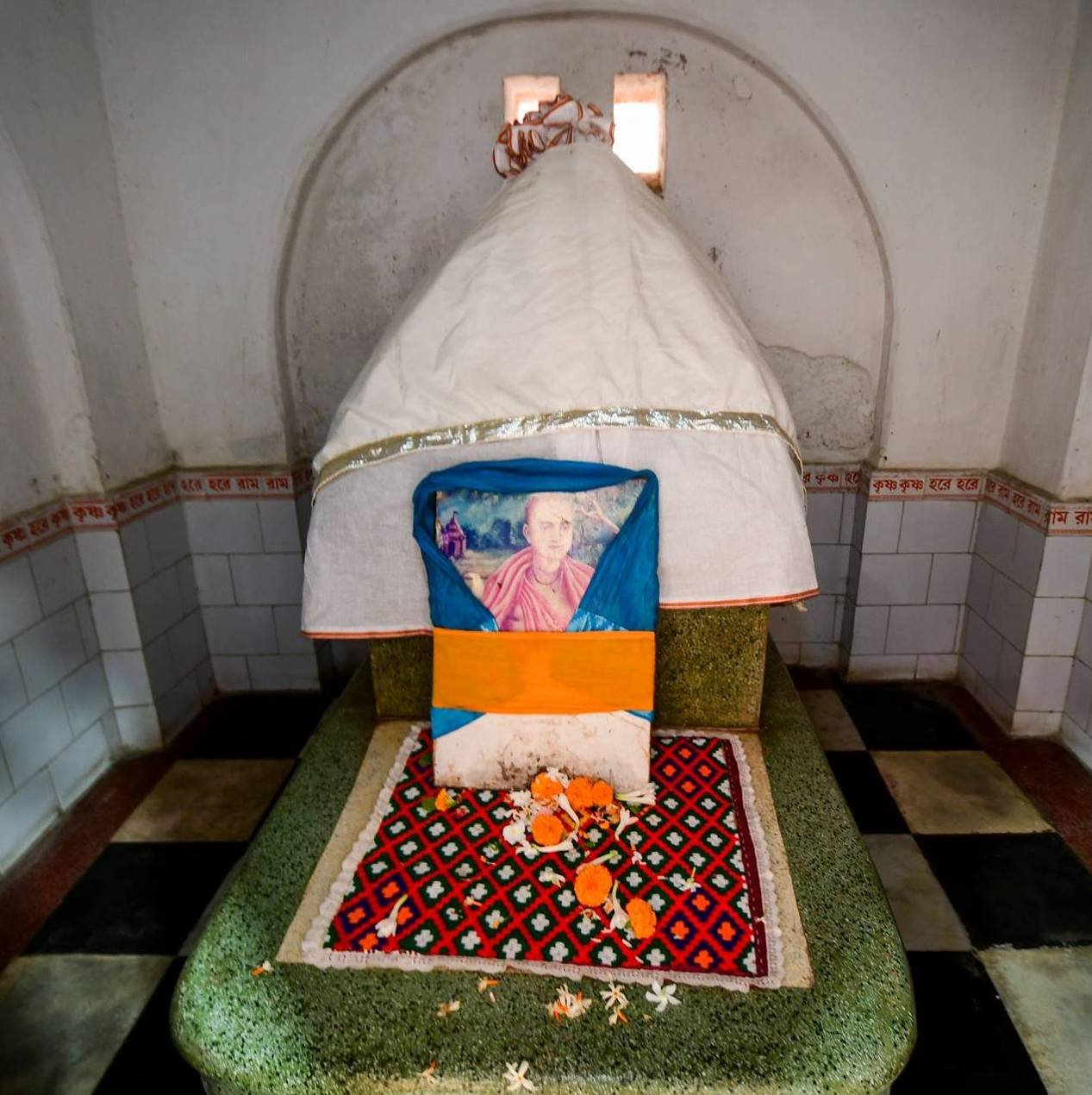
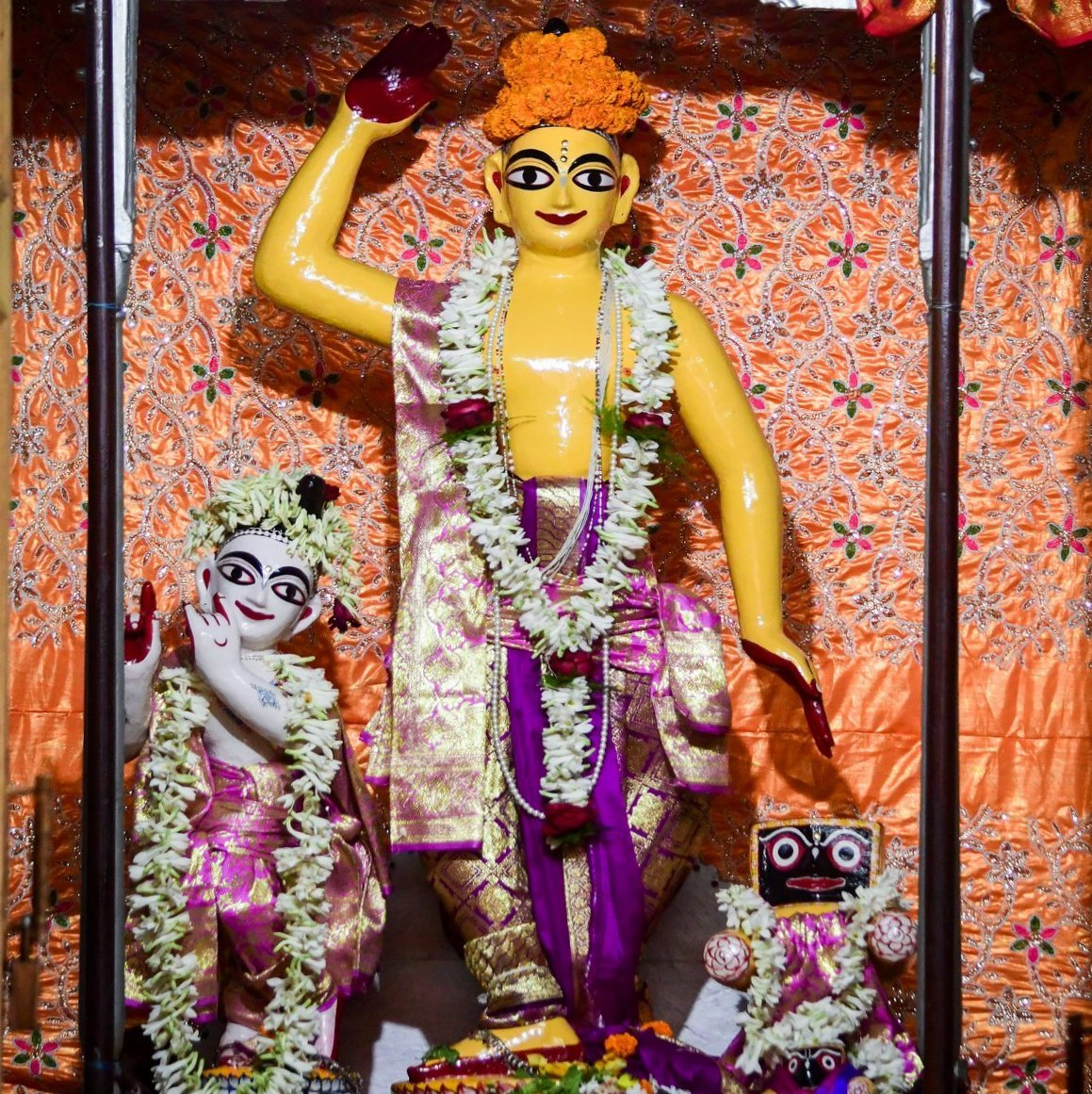
Lord Caitanya’s acceptance of Sannyāsa
This tract of land, Navadvīpa, is the place of highly educated brāhmaṇas from time immemorial. So Śrī Caitanya Mahāprabhu belonged to a very respectable brāhmaṇa family, the son of Jagannātha Miśra; His grandfather, Nīlāmbara Cakravartī. Very respectful, respectable persons. He took birth in that family. Personally He was very beautiful; therefore His another name is Gaurasundara. And He was very learned scholar also; therefore His another name is Nimāi Paṇḍita. So . . . and in His family life He had very nice, beautiful young wife, Viṣṇupriyā, and very affectionate mother, and He was very influential. You know that. In one day He collected about one hundred thousand followers to protest against the Kazi’s order. So in this way His social position was very favorable. Personal position was very favorable. Still, He took sannyāsa, left home. Why? Dayitaye: in order to favor, in order to show mercy to the fallen souls of the world.
So He left a legacy that anyone who has taken birth in India,
bhārata-bhūmite manuṣya-janma haila yāra
janma sārthaka kari’ kara para-upakāra
(CC Adi 9.41)
So He exhibited personally how to do para-upakāra, welfare to others, fallen souls. So this sannyāsa means following the order of Śrī Caitanya Mahāprabhu that,
āmāra ājñāya guru hañā tara’ ei deśa
yāre dekha tāre kaha ‘kṛṣṇa’-upadeśa
(CC Madhya 7.128)
So not only . . . we are trying to create a position that not only the Indians have got this responsibility, but according to Śrī Caitanya Mahāprabhu, anyone—pṛthivīte āche yata nagarādi grāma (CB Antya-khaṇḍa 4.126)—they should take up this missionary work. And I am so much obliged to you, you American boys and girls also, that you have taken this Kṛṣṇa consciousness movement very seriously.
(760205 – Lecture Initiation Sannyasa Excerpt – Mayapur)
At the end of His twenty-fourth year, in the month of Māgha, Śrī Caitanya Mahāprabhu accepted the sannyāsa order during the waxing period of the moon.
(CC Madhya 3.3)
After saying this, Keśava Bhāratī, the spiritual master, went back to his village, Katwa. Lord Caitanya Mahāprabhu went there and accepted the renounced order of life [sannyāsa].
PURPORT
At the end of His twenty-fourth year, at the end of the fortnight of the waxing moon, Śrī Caitanya Mahāprabhu left Navadvīpa and crossed the river Ganges at a place known as Nidayāra-ghāṭa. Then He reached Kaṇṭaka-nagara, or Kāṭoyā (Katwa), where He accepted ekadaṇḍa-sannyāsa according to the Śaṅkarite system. Since Keśava Bhāratī belonged to the Śaṅkarite sect, he could not initiate Caitanya Mahāprabhu into the Vaiṣṇava sannyāsa order, whose members carry the tridaṇḍa.
(CC Adi 17.272)
Before disclosing His desire to take the renounced order of life, Lord Caitanya first went to the house of Mukunda Datta, but at that time Mukunda Datta requested Lord Caitanya Mahāprabhu to continue His saṅkīrtana movement for a few days more before taking sannyāsa. This is stated in the Caitanya-bhāgavata, Madhya-khaṇḍa, Chapter Twenty-six. The information of Lord Caitanya’s accepting the renounced order was made known to Gadādhara Paṇḍita, Candraśekhara Ācārya and Mukunda Datta by Nityānanda Prabhu, and therefore all of them went to Katwa and arranged for kīrtana and all the paraphernalia for Lord Caitanya’s acceptance of sannyāsa. After the Lord took sannyāsa, they all followed Him, especially Śrī Nityānanda Prabhu, Gadādhara Prabhu and Mukunda Datta, who followed Him all the way to Puruṣottama-kṣetra. In this connection one may refer to Śrī Caitanya-bhāgavata, Antya-khaṇḍa, Chapter Two. In the place known as Jaleśvara, Nityānanda Prabhu broke the sannyāsa rod of Caitanya Mahāprabhu (CC Madhya 1.97). Mukunda Datta was also present at that time. He went every year from Bengal to see Lord Caitanya at Jagannātha Purī.
(CC Adi 10.40 purport)
When Śrī Caitanya Mahāprabhu decided to accept the renounced order of life, Candraśekhara Ācārya was informed of this by Śrī Nityānanda Prabhu, and therefore he was present when Lord Caitanya accepted sannyāsa from Keśava Bhāratī in Katwa. It is he who first spread the word in Navadvīpa of Lord Caitanya’s accepting sannyāsa. Śrī Candraśekhara Ācārya was present during many important incidents in the pastimes of Lord Caitanya Mahāprabhu. He therefore forms the second branch of the tree of Lord Caitanya.
(CC Adi 10.13 purport)
In the Gaura-gaṇoddeśa-dīpikā (52), it is said:
- mathurāyāṁ yajña-sūtraṁ purā kṛṣṇāya yo muniḥ
- dadau sāndīpaniḥ so ’bhūd adya keśava-bhāratī
“Sāndīpani Muni, who formerly offered the sacred thread to Kṛṣṇa and Balarāma, later became Keśava Bhāratī.” It is he who offered sannyāsa to Śrī Caitanya Mahāprabhu. There is another statement about Keśava Bhāratī from the Gaura-gaṇoddeśa-dīpikā (117): iti kecit prabhāṣante ’krūraḥ keśava-bhāratī. “According to some authoritative opinions, Keśava Bhāratī is an incarnation of Akrūra.” Keśava Bhāratī offered the sannyāsa order to Śrī Caitanya Mahāprabhu in the year 1432 śakābda (A.D. 1510) in Katwa. This is stated in the Vaiṣṇava-mañjuṣā, Part Two.
(CC Adi 9.13-15 purport)
śrī-gadādhara dāsa śākhā sarvopari
kājī-gaṇera mukhe yeṅha bolāila hari
Śrī Gadādhara dāsa, the twenty-third branch, was understood to be the topmost, for he induced all the Muslim Kazis to chant the holy name of Lord Hari.
(CC Adi 10.53) / (Caitanya tree – branch 23) / (Nityānanda Prabhu – branch 3)
The Bhakti-ratnākara (Seventh Wave), informs us that after the disappearance of Lord Caitanya Mahāprabhu, Gadādhara dāsa came from Navadvīpa to Katwa. Thereafter he came to Eṅḍiyādaha and resided there. He is stated to be the luster of the body of Śrīmatī Rādhārāṇī, just as Śrīla Gadādhara Paṇḍita Gosvāmī is an incarnation of Śrīmatī Rādhārāṇī Herself. Caitanya Mahāprabhu is sometimes explained to be rādhā-bhāva-dyuti-suvalita, or characterized by the emotions and bodily luster of Śrīmatī Rādhārāṇī. Gadādhara dāsa is this dyuti, or luster. In the Gaura-gaṇoddeśa-dīpikā he is described to be the expansion potency of Śrīmatī Rādhārāṇī. He counts among the associates of both Śrīla Gaurahari and Nityānanda Prabhu; as a devotee of Śrī Caitanya Mahāprabhu he was one of the associates of Lord Kṛṣṇa in conjugal love, and as a devotee of Lord Nityānanda he is considered to have been one of the friends of Kṛṣṇa in pure devotional service. Even though he was an associate of Lord Nityānanda Prabhu, he was not among the cowherd boys but was situated in the transcendental mellow of conjugal love. He established a temple of Śrī Gaurasundara in Katwa.
(CC Adi 10.53 purport)
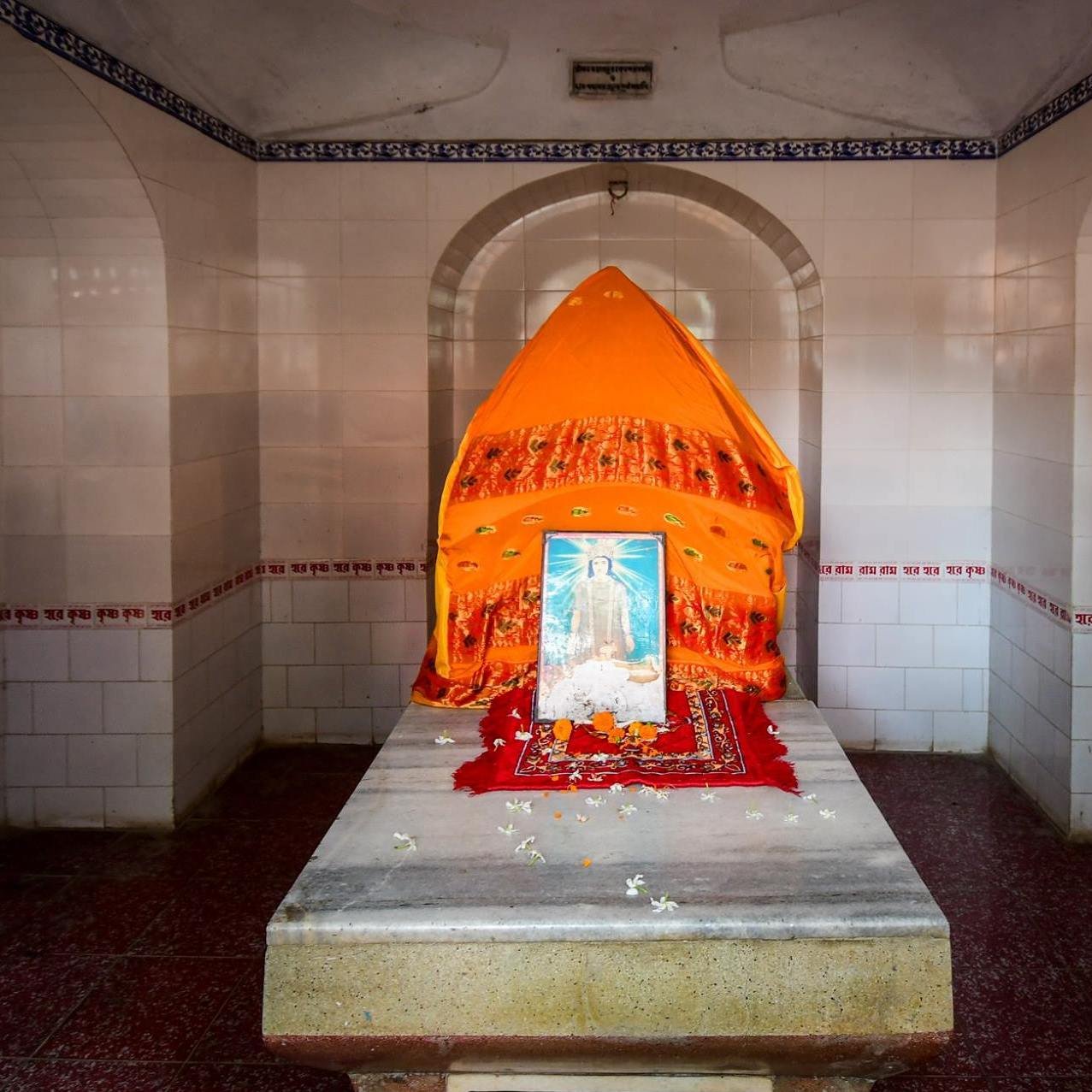
Shrine of Mahāprabhu’s Hair (Keśa Samādhi)
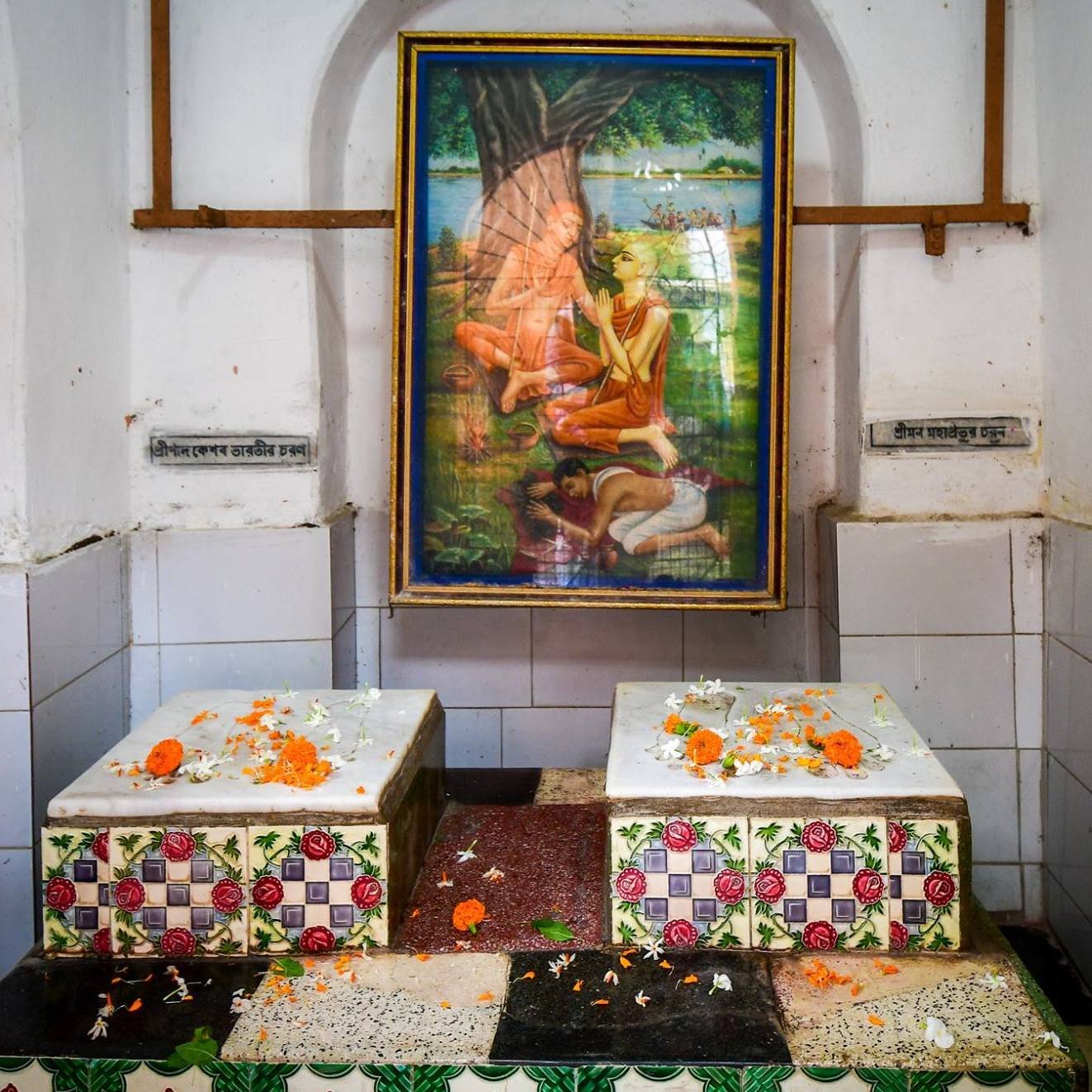
Mahāprabhu’s Sannyāsa Initiation — Sacred Footprints of Keśava Bhāratī (Left) & Mahāprabhu (Right)