
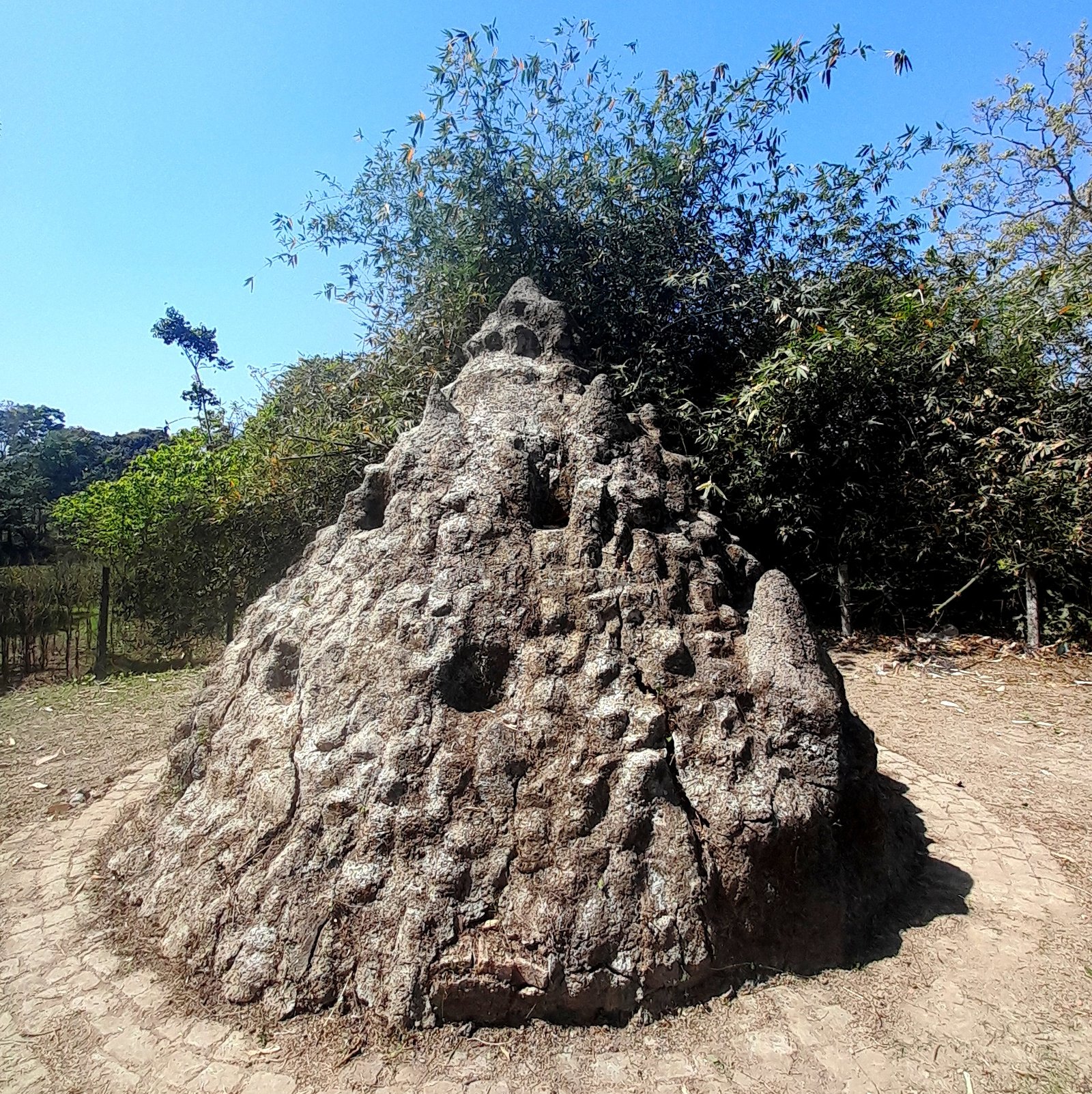
Arka-tila
arka – sun (ŚB 3.30.22)
arka – the sun (ŚB 1.11.27, ŚB 2.5.30, ŚB 7.12.2, ŚB 4.22.52)
arka — the sun globe (ŚB 1.7.30)
arka — of the sun (BG 11.17, ŚB 3.21.51, ŚB 7.12.20)
Crossing over the Viraja River and leaving Brahmaninagara, I will climb on top of Arka-tilā. As I sit there and worship Gaurahari. I will become intoxicated with nectar while singing the holy name.
The sun-god, Arkadeva, will mercifully appear before me with a red-hued complexion, long-arms, wearing pinkish cloth and tulasi-mālā, sandalwood smeared on his body, the name of Gaurahari on his lips, and tears in his eyes.
He will say to me, “My son, I have appeared before you because you are a devotee of Gauranga. We demigods, directors of material affairs, are also servants of Gauranga’s lotus feet. I simply aspire to be the servant of the servants of Gauranga’s lotus feet. By my blessings, you will get kṛṣṇa-bhakti, and you will have the strength to live in the dhama and chant the holy name. But please come here regularly and sing Krsna’s nectar-filled name for my pleasure.”
Paying obeisances at Suryadeva’s feet. I will proceed to Mahatpura. This Mahatpura is nondifferent from Kamyavana.
(Sri Navadvipa Bhava-taranga)
“The sun, full of infinite effulgence, who is the king of all the planets and the image of the good soul, is like the eye of this world. I adore the primeval Lord, Govinda, in pursuance of whose order the sun performs his journey, mounting the wheel of time.” (BS 5.52)
(CC Adi 7.157 purport)
In the Gāyatrī mantra, we chant, oṁ bhūr bhuvaḥ svaḥ tat savitur vareṇyam. Above the Bhūloka planetary system is Bhuvarloka, and above that is Svargaloka, the heavenly planetary system. All these planetary systems are controlled by Savitā, the sun-god. By chanting the Gāyatrī mantra just after rising early in the morning, one worships the sun-god.
(SB 5.1.31 purport)
So every time, if you drink water and remember Kṛṣṇa, then you are on the devotional service. Where is the difficulty? But the rascals will not take it. That is the . . . where is the difficulty? Everyone drinks water, and as soon as you drink water when you are thirsty, and the taste of the water appeases your thirst. So if you simply remember that “In the Bhagavad-gītā it is stated that this taste is Kṛṣṇa,” then immediately you remember Kṛṣṇa. And as soon as you remember Kṛṣṇa, it is devotional service, smaraṇam. Where is the difficulty? Where is the difficulty for becoming Kṛṣṇa conscious? Raso ‘ham apsu kaunteya prabhāsmi śaśi-sūryayoḥ (BG 7.8): “I am the illumination of the moon and the sun.” So who does not see the moonshine and the sunshine? In daytime you see the sunshine and at night you see the moonshine. So if you see the sunshine and moonshine and if you remember Kṛṣṇa’s instructions that “This sunshine, moonshine, I am,” so where is the difficulty?
(760316 – Lecture Festival SB 07.09.38 Gaura-Purnima – Mayapur)