
The Story of Śrī Śrī Pañca-tattva in ISKCON Māyāpur
Śrīla Prabhupāda’s Vision • Ancient Craftsmanship • Historic Arrival • A New Era of Mercy
A 10-minute journey through the vision, craftsmanship, history, and installation of the magnificent Śrī Śrī Pañca-tattva Deities in ISKCON Māyāpur.
A Vision That Welcomes the World
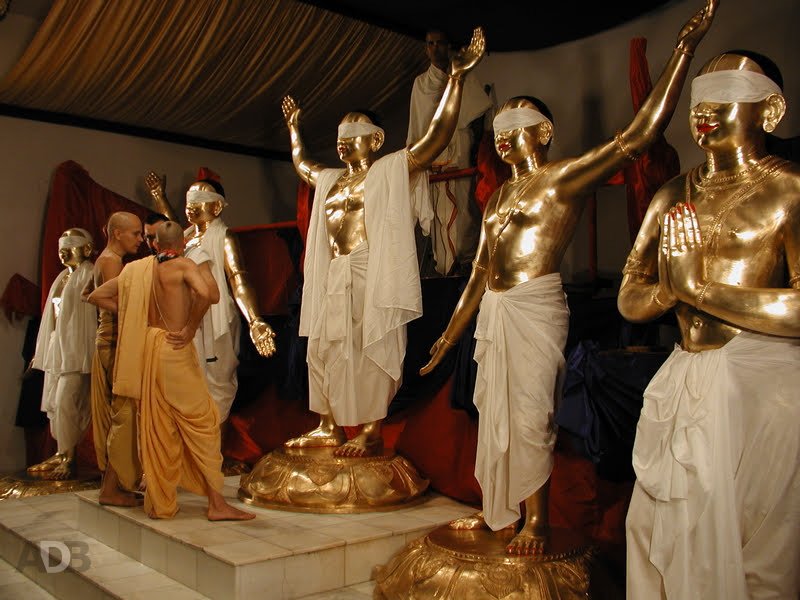
Every day, thousands of pilgrims enter the Śrī Māyāpur Chandrodaya Mandir and offer their prayers to the magnificent forms of Śrī Śrī Pañca-tattva—Śrī Caitanya Mahāprabhu, Śrī Nityānanda Prabhu, Śrī Advaita Ācārya, Śrī Gadādhara Paṇḍita, and Śrīvāsa Ṭhākura. With Their arms raised in divine compassion, They welcome people from every nation, language, and culture to join the congregational chanting of the holy names. Millions of pilgrims have stood before Them with folded hands, offered prayers, sung during kīrtana, and experienced the unique spiritual atmosphere of Śrī Māyāpur-dhāma.
Yet few know the extraordinary story behind Their manifestation.
The creation of these Deities was not simply an artistic achievement, nor merely the construction of five monumental aṣṭa-dhātu sculptures. It was the fulfilment of a desire personally expressed by His Divine Grace A. C. Bhaktivedanta Swami Prabhupāda, requiring years of scriptural research, traditional craftsmanship, engineering, and the dedicated service of hundreds of devotees across the world.
Their story begins long before the first mould was made or the first aṣṭa-dhātu casting took shape.
The story begins with a vision.
Śrīla Prabhupāda’s Vision
Long before construction of the Temple of the Vedic Planetarium (TOVP) began, Śrīla Prabhupāda envisioned magnificent aṣṭa-dhātu Deities of Śrī Śrī Pañca-tattva standing on the central altar of the TOVP.
His desire was deeply connected with Lord Śrī Caitanya Mahāprabhu’s mission.
Just as Lord Caitanya opened His arms to embrace every living being without discrimination, these Deities would stand with uplifted arms, eternally inviting the entire world to chant the Hare Kṛṣṇa mahā-mantra and receive the mercy of the saṅkīrtana movement.
Pilgrims from every continent would arrive in Śrī Māyāpur-dhāma and immediately be welcomed by the merciful glance of Lord Śrī Caitanya Mahāprabhu and His eternal associates.
Although Śrīla Prabhupāda left this world before seeing that vision fulfilled, he spoke clearly about what he desired.
Bhavānanda Prabhu recalls the first time Śrīla Prabhupāda spoke about the Deities for the future Māyāpur temple:
“Śrīla Prabhupāda was talking about the deities for the big temple. He said, ‘I want three altars like we have in L.A. The first altar will be guru-paramparā back to Lord Brahmā.’ At another time, when speaking of the guru-paramparā in this way, Prabhupāda said ‘back to the Six Goswāmīs, so it’s open.’
“Then he said, ‘On the middle altar…’ and I, of course, interrupted him, as we all often did in those days, ‘…will be Rādhā-Mādhava?’, because I was thinking that he wanted it like L.A., and Rukmiṇī-Dvārakādīśa were on the center altar. Śrīla Prabhupāda said, ‘No, Pañca-tattva: Śrī Kṛṣṇa Caitanya, Prabhu Nityānanda, Śrī Advaita, Gadādhara, and Śrīvāsa.’ And he said, ‘The philosophy is that you bow down to the guru-paramparā at the first altar. By their mercy, you are delivered to the lotus feet of the Pañca-tattva. Then, by Their mercy, you will be brought to the lotus feet of Rādhā-Mādhava. So on the third altar will be Rādhā-Mādhava and the aṣṭa-sakhīs.’
“When I asked about the Pañca-tattva, Śrīla Prabhupāda said, ‘Lord Caitanya should be seven feet tall and covered with gold.’ I replied, ‘Oh, not marble?’ Prabhupāda answered, ‘No, They should be aṣṭa-dhātu.'”
— “Full of Abundant Grace”, Māyāpur Magazine (2006)
That conversation would shape the entire project.
Instead of carving marble Deities, the devotees now faced a much greater challenge: creating enormous worshipable aṣṭa-dhātu Deities using ancient casting techniques rooted in the Vedic tradition.
It was an undertaking unlike anything ISKCON had attempted before.
More than twenty years after Śrīla Prabhupāda first expressed this desire, devotees from around the world united to transform his vision into reality.
Reference: The Advent of Śrī Śrī Pañca-tattva, pp. 8–12.
Additional Source: Full of Abundant Grace, Māyāpur Magazine, 2006.
What is Aṣṭa-dhātu?
Following Śrīla Prabhupāda’s instruction, Śrī Śrī Pañca-tattva were cast in aṣṭa-dhātu (literally, “eight metals”), a sacred alloy traditionally used for worshipable Deities in India.
For these Deities, the aṣṭa-dhātu alloy was prepared using eight metals: copper, brass, tin, lead, iron, gold, silver, and steel.
Because each member of Śrī Śrī Pañca-tattva has a distinct scriptural complexion, the proportions of these metals were carefully adjusted for each Deity. As described in The Advent of Śrī Śrī Pañca-tattva:
“Lord Caitanya is described as yellow golden color; and Nityānanda is described as reddish golden color; Gadādhara has a similar complexion as Lord Caitanya; and Advaita Ācārya is said to be light in color. In this way each deity needed a unique mixture of metals, according to the complexion of each personality.”
Reference: The Advent of Śrī Śrī Pañca-tattva, p. 35.
A Search Across India
Once the decision had been made to fulfil Śrīla Prabhupāda’s desire, another question immediately arose:
Who could possibly create five aṣṭa-dhātu Deities of this size and beauty?
Modern foundries possessed the technology to cast large metal sculptures, but these were to become worshipable Deities, requiring a very different approach.
Every proportion, every gesture, every ornament, every expression, and every sacred measurement had to conform to the standards preserved in the Śilpa-śāstras, the traditional scriptures describing sacred temple architecture and Deity making.
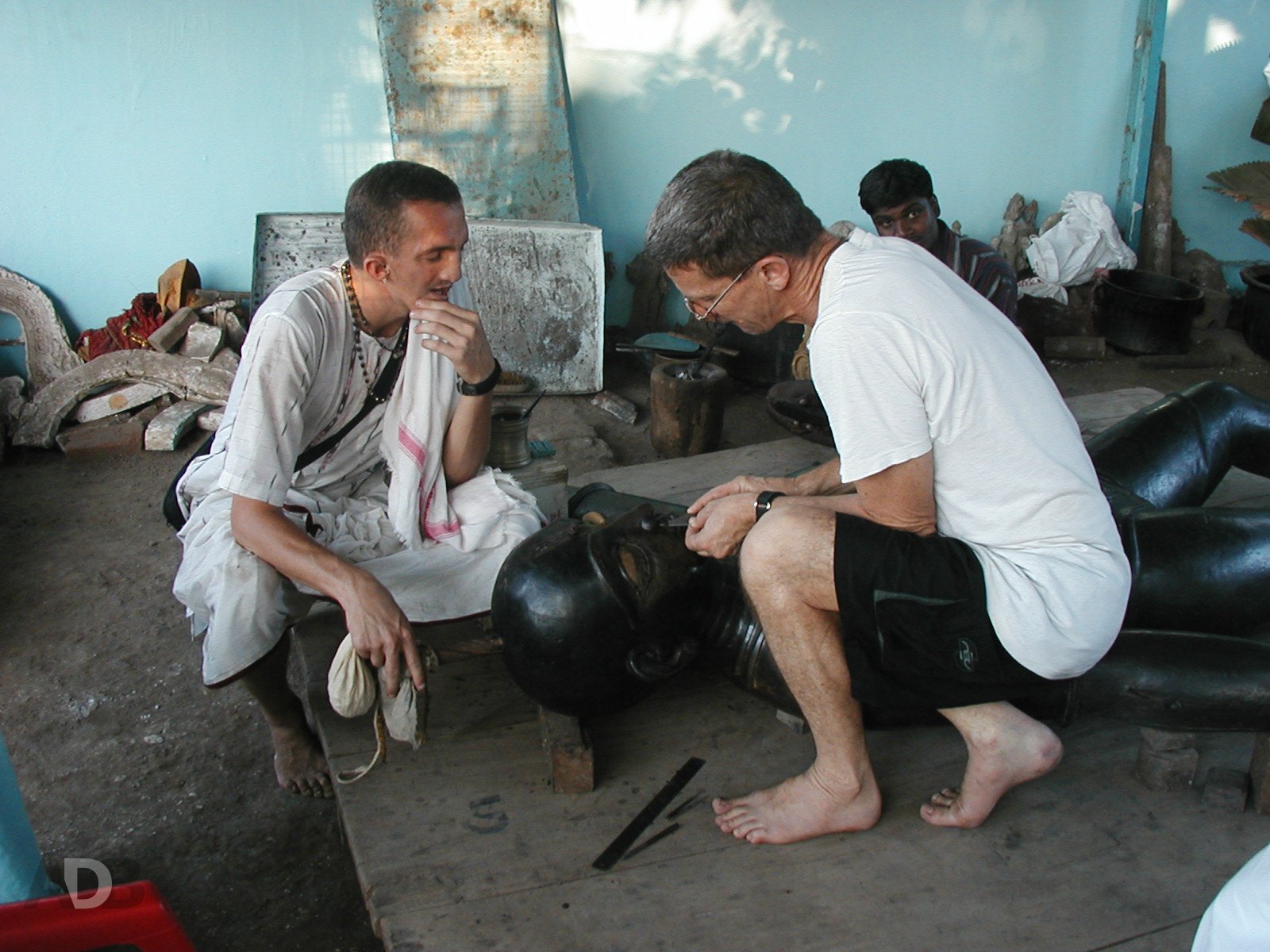
The search led the devotees across India before finally arriving in the small South Indian town of Swamimalai, near Kumbakonam. There, the project was entrusted to Śrī M. Muthiah Sthapati, one of India’s distinguished hereditary temple sculptors. Working closely with him was Bharat Mahārāja Dāsa, supervising the mould making, casting, carving, and finishing of the Deities on behalf of ISKCON, helping to ensure that every stage faithfully reflected Śrīla Prabhupāda’s vision.
The hereditary Sthapatis of Swamimalai had preserved the traditional lost-wax casting process for over a thousand years. Yet even for these master craftsmen, the creation of Śrī Śrī Pañca-tattva would become one of the most ambitious projects they had ever undertaken.
Reference: The Advent of Śrī Śrī Pañca-tattva, pp. 18–26.
Every Detail Was Researched
Long before any clay or wax was prepared, months were devoted to research.
The devotees were not simply creating large Deities—they were striving to reveal the unique personality of each member of the Pañca-tattva exactly as described in scripture.
Every feature was carefully discussed and refined.
How high should Lord Śrī Caitanya Mahāprabhu raise His arms?
How should Lord Nityānanda Prabhu’s dancing posture express ecstatic compassion?
How should Śrī Advaita Ācārya’s uplifted hands proclaim the Lord’s appearance?
How could Śrī Gadādhara Paṇḍita’s gentle devotion be reflected in His expression?
How should Śrīvāsa Ṭhākura stand as the perfect representative of the pure devotee?
Nothing was left to chance.
Ancient scriptures, paintings, historical references, and the guidance of senior Vaiṣṇavas were all consulted before the sculptors began their work.
The result was five Deities, each possessing a distinct mood while together presenting one harmonious invitation to Lord Śrī Caitanya Mahāprabhu’s saṅkīrtana movement.
It is this careful attention to spiritual detail that gives the Pañca-tattva altar its remarkable sense of unity and life.
Reference: The Advent of Śrī Śrī Pañca-tattva, pp. 20–30.
Looking Ahead…
Finding the right craftsmen was only the beginning.
The next challenge was even greater.
How could five Deities weighing more than 13 metric tonnes be created using a bronze-casting technique that had changed little in more than a thousand years?
The answer lay in one of humanity’s oldest artistic traditions—the remarkable lost-wax casting process, where fire, clay, molten metal, and devotion would combine to fulfil Śrīla Prabhupāda’s extraordinary vision.
Fire, Aṣṭa-dhātu and Devotion
Finding the right craftsmen and finalising the designs marked the end of one chapter—but the beginning of another.
Now came the challenge of transforming carefully prepared drawings into five worshipable aṣṭa-dhātu Deities.
The work would combine ancient craftsmanship, extraordinary engineering, and deep devotion.
An Ancient Art Preserved for More Than a Thousand Years
The Śrī Śrī Pañca-tattva Deities were not carved from stone, nor assembled from sheets of metal.
Instead, They were created using the ancient lost-wax bronze casting process, a remarkable technique that has been preserved in South India for more than a thousand years.
Every Deity first took shape as a full-sized wax model. Using measurements carefully derived from the Śilpa-śāstras, the hereditary Sthapatis patiently sculpted every feature directly into the wax before the casting process began. The completed wax model served as the exact template for the finished aṣṭa-dhātu Deity.
Once completed, each wax model was carefully coated with many layers of fine clay.
Layer after layer was added until an enormous mould surrounded the entire figure.
The moulds were then dried for weeks before being fired in specially prepared pits.
As the clay hardened in the intense heat, the wax melted away—leaving a perfect hollow cavity ready to receive molten aṣṭa-dhātu.
A process developed thousands of years ago was about to give birth to one of ISKCON’s greatest achievements.
Reference: The Advent of Śrī Śrī Pañca-tattva, pp. 42–48.
Fire, Metal and Faith
The day of casting was unlike any ordinary day in a foundry.
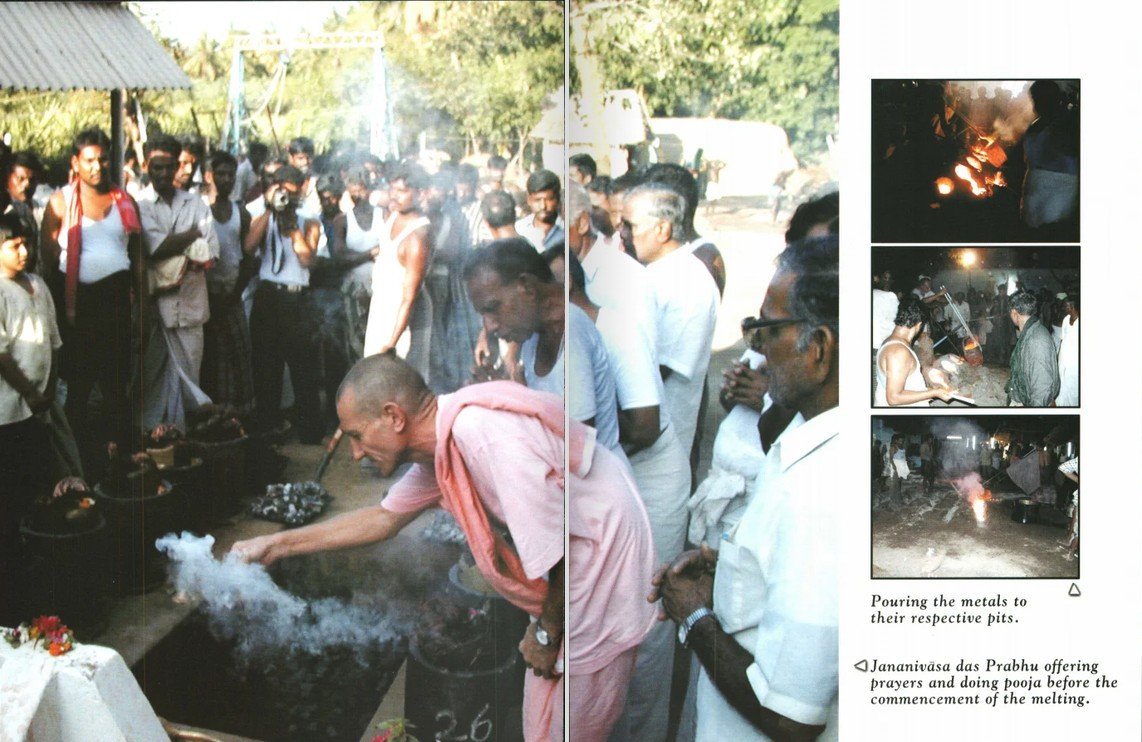
Before the furnaces were lit, prayers and worship were offered, seeking the blessings of the Lord for the sacred work ahead.
These were not simply pieces of artwork.
They were future worshipable Deities who would receive daily service for generations to come.
As the furnaces reached extraordinary temperatures, thousands of kilograms of aṣṭa-dhātu became a glowing river of molten metal.
At precisely the right moment, the metal was carefully poured into the giant clay moulds.
Once the aṣṭa-dhātu began to flow, there was no opportunity to pause or correct mistakes.
Every craftsman had to work with complete concentration.
Months of preparation depended upon those few critical moments.
The success of each casting required not only exceptional skill, but complete cooperation between the Sthapatis, foundry workers, engineers, and devotees assisting the project.
Reference: The Advent of Śrī Śrī Pañca-tattva, pp. 49–55.
A Worldwide Offering of Devotion
Perhaps the most touching aspect of the project was that devotees around the world wanted to become part of it.
Many offered donations of gold, silver, and even personal jewellery, requesting that these offerings be included in the sacred alloy used to cast the Deities.
Wedding rings.
Necklaces.
Bracelets.
Family heirlooms.
Each carried not merely material value, but the love and devotion of the devotee making the offering.
In this way, the finished Deities became far more than a remarkable work of craftsmanship.
They became a collective offering from the worldwide Vaiṣṇava community—a tangible expression of devotion that continues to inspire pilgrims to this day.
Reference: The Advent of Śrī Śrī Pañca-tattva, pp. 49–55, 94.
As the finishing work progressed, Bharat Mahārāja Dāsa, who supervised the project on behalf of ISKCON, reflected that the extraordinary beauty of Śrī Śrī Pañca-tattva seemed to reveal itself naturally, as though the Lord Himself were guiding every stage of Their manifestation:
“The Deities apparently sculptured themselves.”
Beauty Revealed, One Detail at a Time
When the aṣṭa-dhātu had cooled, the work was far from finished.
The giant clay moulds were carefully broken apart, revealing the first glimpse of each Deity.
It was a moment of great anticipation.
Months of labour had led to this point.
Yet the newly cast aṣṭa-dhātu figures were only the beginning.
Weeks of meticulous hand-finishing followed.
Master craftsmen patiently filed rough edges, sharpened delicate ornaments, engraved intricate patterns, polished every surface, and refined each expression.
Every curl of hair…
Every finger…
Every toenail…
Every fold of cloth…
received individual attention.
Nothing was hurried.
The craftsmen understood the sacred responsibility entrusted to them. They were creating Deities who would inspire devotion in millions of pilgrims for generations to come.
For everyone involved, it felt less like creating something new and more like uncovering a beauty that had always been waiting to emerge.
Reference: The Advent of Śrī Śrī Pañca-tattva, pp. 57–68.
Five Deities, One Extraordinary Offering
Each member of Śrī Śrī Pañca-tattva was cast individually over nearly four months using the ancient lost-wax bronze casting process. Every casting took place on an auspicious day according to traditional Vedic customs.
Together, the five Deities weigh an extraordinary 13.28 metric tonnes, making Them among the largest worshipable Deities in the world.
Śrī Caitanya Mahāprabhu
Casting Date: 18 April 2003
Weight: 2,830 kg
Śrī Nityānanda Prabhu
Casting Date: 8 May 2003
Weight: 2,680 kg
Śrī Gadādhara Paṇḍita
Casting Date: 20 June 2003
Weight: 2,620 kg
Śrī Advaita Ācārya
Casting Date: 15 July 2003
Weight: 2,560 kg
Śrīvāsa Ṭhākura
Casting Date: 2 August 2003
Weight: 2,590 kg
Combined Weight
13,280 kg (13.28 metric tonnes)
Together, these magnificent aṣṭa-dhātu Deities represent one of the largest worshipable Pañca-tattva Deities in the world, standing as the fulfilment of Śrīla Prabhupāda’s vision and a lasting offering of devotion for generations to come.
Reference: The Advent of Śrī Śrī Pañca-tattva, pp. 60–68.
Looking Ahead…
By the beginning of 2004, the extraordinary work was finally complete.
Five magnificent aṣṭa-dhātu Deities now stood ready to leave the hereditary workshops of Swamimalai.
What followed was far more than the transport of sacred Deities across India.
It became a joyous pilgrimage.
Escorted by kīrtana, welcomed by devotees along the way, and finally received by thousands in Śrī Māyāpur-dhāma, Their 1,500-kilometre journey marked the beginning of one of the most unforgettable festivals in ISKCON’s history.
The Journey That Captured the Hearts of Devotees
With months of sculpting, casting, engraving, and polishing finally complete, the moment everyone had been waiting for had arrived.
Śrī Śrī Pañca-tattva were ready to leave Swamimalai.
For the hereditary Sthapatis who had lovingly served throughout the project, this was a deeply emotional occasion. For months they had devoted their skills to fulfilling Śrīla Prabhupāda’s vision. Now the Deities would begin Their journey to the spiritual capital of Lord Śrī Caitanya Mahāprabhu’s movement.
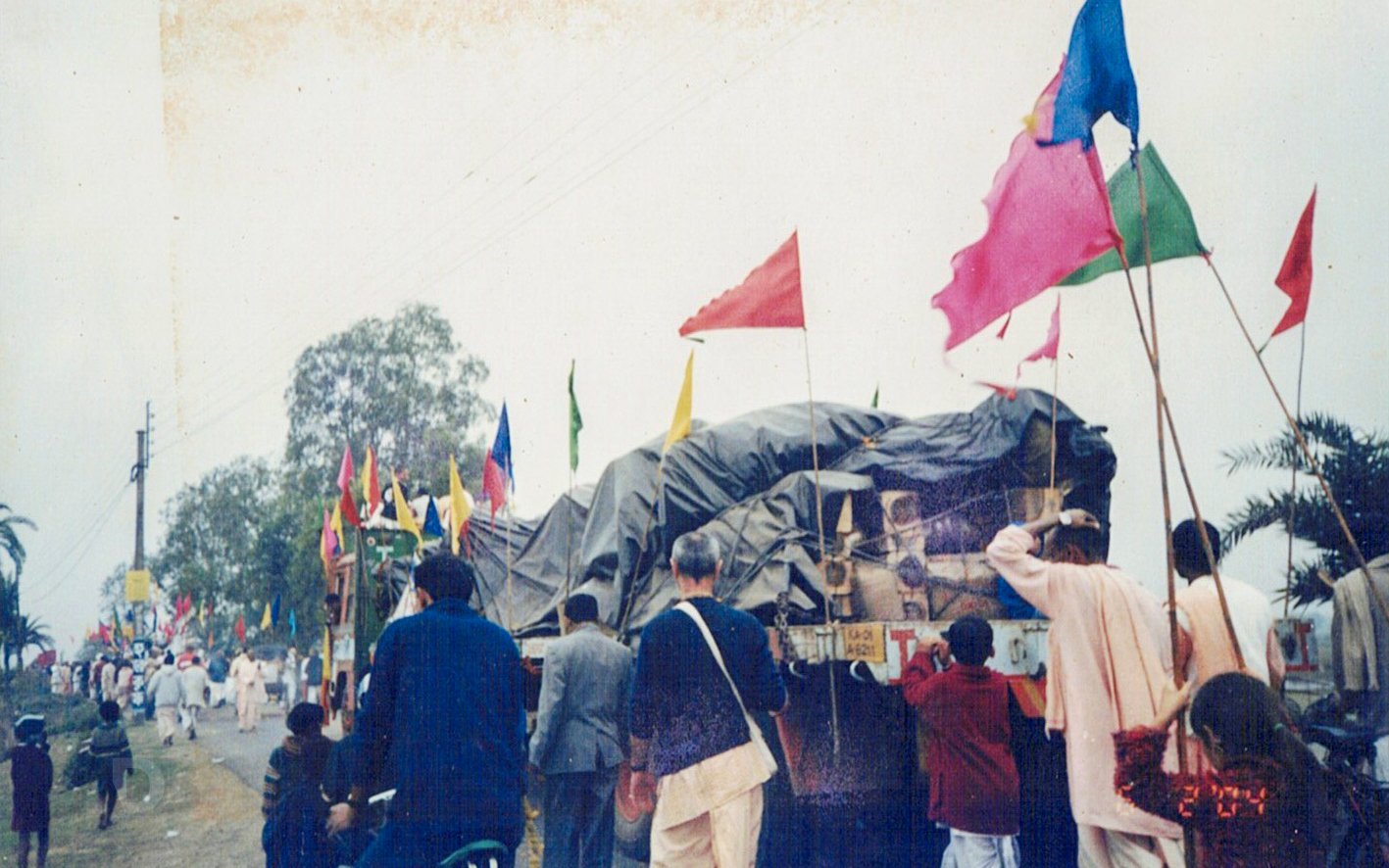
On 31 January 2004, the five magnificent aṣṭa-dhātu Deities departed Kumbakonam for Śrī Māyāpur-dhāma.
Before leaving town, They were taken to the famous Śrī Swaminathar Temple, where They respectfully circumambulated the temple before beginning the long journey north.
As the trucks carrying the Deities slowly pulled away, devotees accompanied Them with joyful saṅkīrtana, filling the roads with the chanting of the Hare Kṛṣṇa mahā-mantra.
This was not merely transportation.
It was a pilgrimage.
Reference: The Advent of Śrī Śrī Pañca-tattva, pp. 68–72.
More Than 1,500 Kilometres of Kīrtana
The journey from Tamil Nadu to West Bengal covered more than 1,500 kilometres.
At every stage of the journey, devotees eagerly awaited the arrival of Śrī Śrī Pañca-tattva. Wherever They stopped, devotees gathered for darśana, offered prayers, performed kīrtana, and welcomed Them with great joy.
The procession became a moving festival.
Every kilometre brought the Deities closer to the place where Śrīla Prabhupāda had envisioned Them standing for generations to come.
For those accompanying the journey, there was a growing sense that something historic was unfolding.
Reference: The Advent of Śrī Śrī Pañca-tattva, pp. 72–80.
The Day Māyāpur Held Its Breath
News travelled quickly through the Māyāpur community.
Śrī Śrī Pañca-tattva are arriving today.
As the expected time drew near, devotees gradually gathered along the road leading into the temple.
The distant sound of mṛdaṅgas and kartālas announced that the procession was approaching.
Soon the trucks carrying the Deities came into view.
Thousands of devotees surrounded Them in jubilant saṅkīrtana.
Flowers filled the air.
Conch shells sounded.
The holy names echoed throughout Śrī Māyāpur-dhāma.
For many devotees, words could not adequately describe the moment.
After so many years of hearing about the project, praying for its success, and eagerly anticipating Their arrival, Śrī Śrī Pañca-tattva had finally come home.
The atmosphere was one of overwhelming gratitude, celebration, and deep spiritual emotion.
Many later recalled that it felt as though Lord Śrī Caitanya Mahāprabhu and His eternal associates had personally arrived to inaugurate a new chapter in the worldwide saṅkīrtana movement.
Reference: The Advent of Śrī Śrī Pañca-tattva, pp. 78–80. Eighteen Days – Śrī Pañca-tattva’s Māyāpur-līlā, pp. 16–18.
“New life had come to Māyāpur, and the air was electric with anticipation.”
— Eighteen Days – Śrī Pañca-tattva’s Māyāpur-līlā
Eighteen Days That Changed Māyāpur
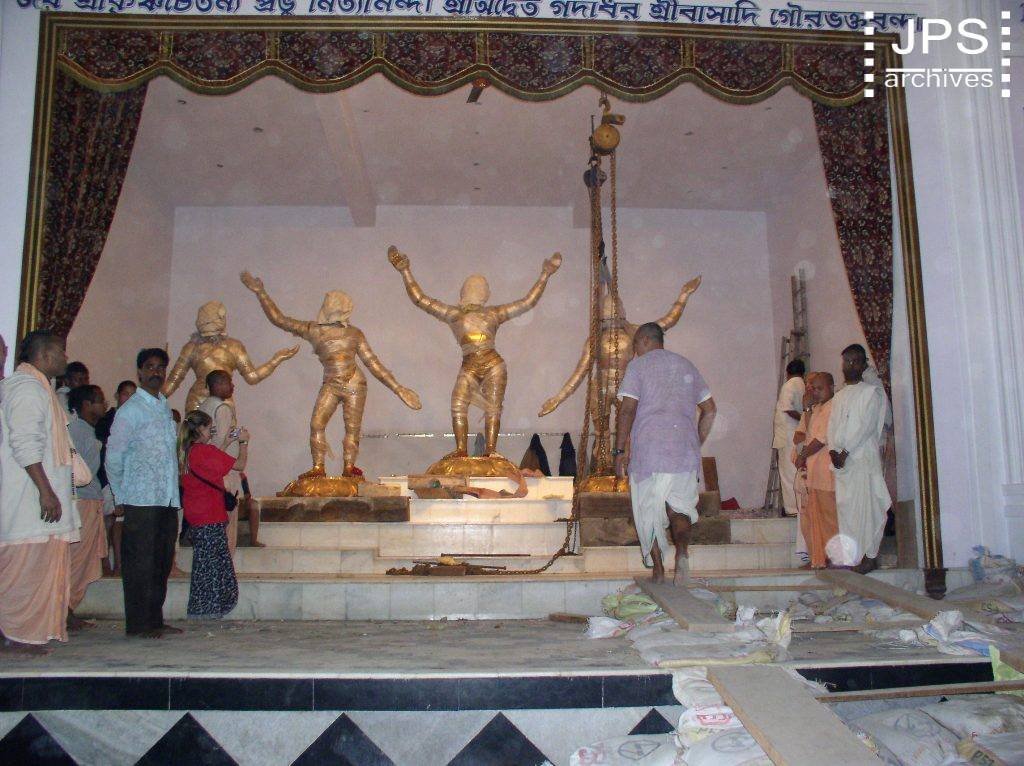
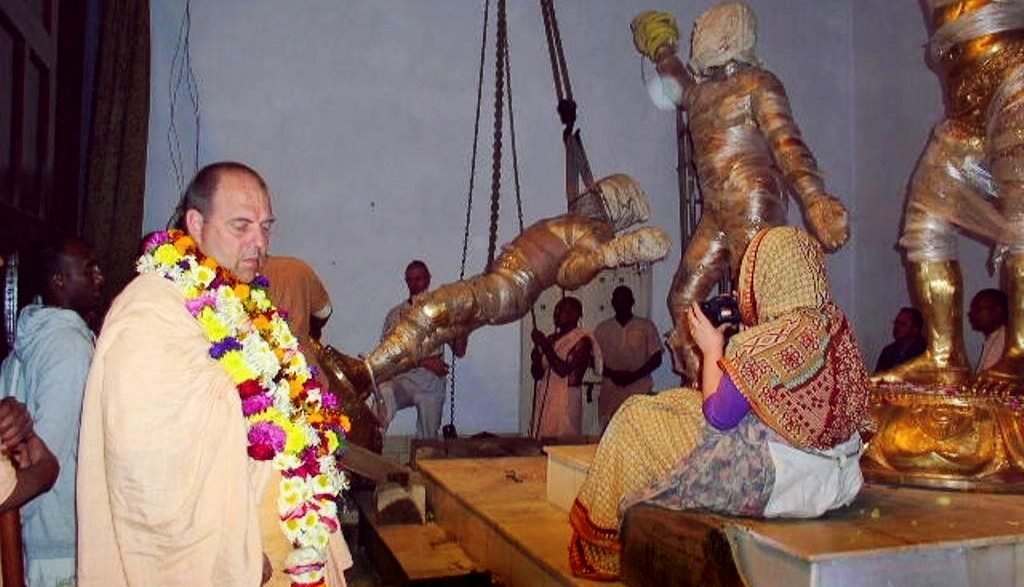
Although Śrī Śrī Pañca-tattva had arrived safely in Māyāpur on 6 February 2004, Their installation would take place eighteen days later, during the annual Gaura-pūrṇimā festival.
Those eighteen days transformed the entire community.
Everywhere one looked, devotees were engaged in service.
Large temporary shelters were erected to welcome the thousands of pilgrims expected to attend.
The temple was beautifully decorated.
Thousands of flower garlands arrived daily.
Scaffolding surrounded the altar as artists completed the final finishing work.
Television screens and sound systems were installed so everyone could participate in the ceremonies.
Day and night, devotees cooked, cleaned, decorated, organised, rehearsed, and served.
Every service—whether great or small—became part of Śrīla Prabhupāda’s offering to Śrī Śrī Pañca-tattva.
The atmosphere throughout Māyāpur was unlike anything devotees had previously experienced.
The excitement continued to grow with each passing day.
The title of the book Eighteen Days beautifully captures this unique period of joyful anticipation between the arrival of the Deities and Their historic installation.
Reference: Eighteen Days – Śrī Pañca-tattva’s Māyāpur-līlā, pp. 12–18.
A Festival Remembered Forever
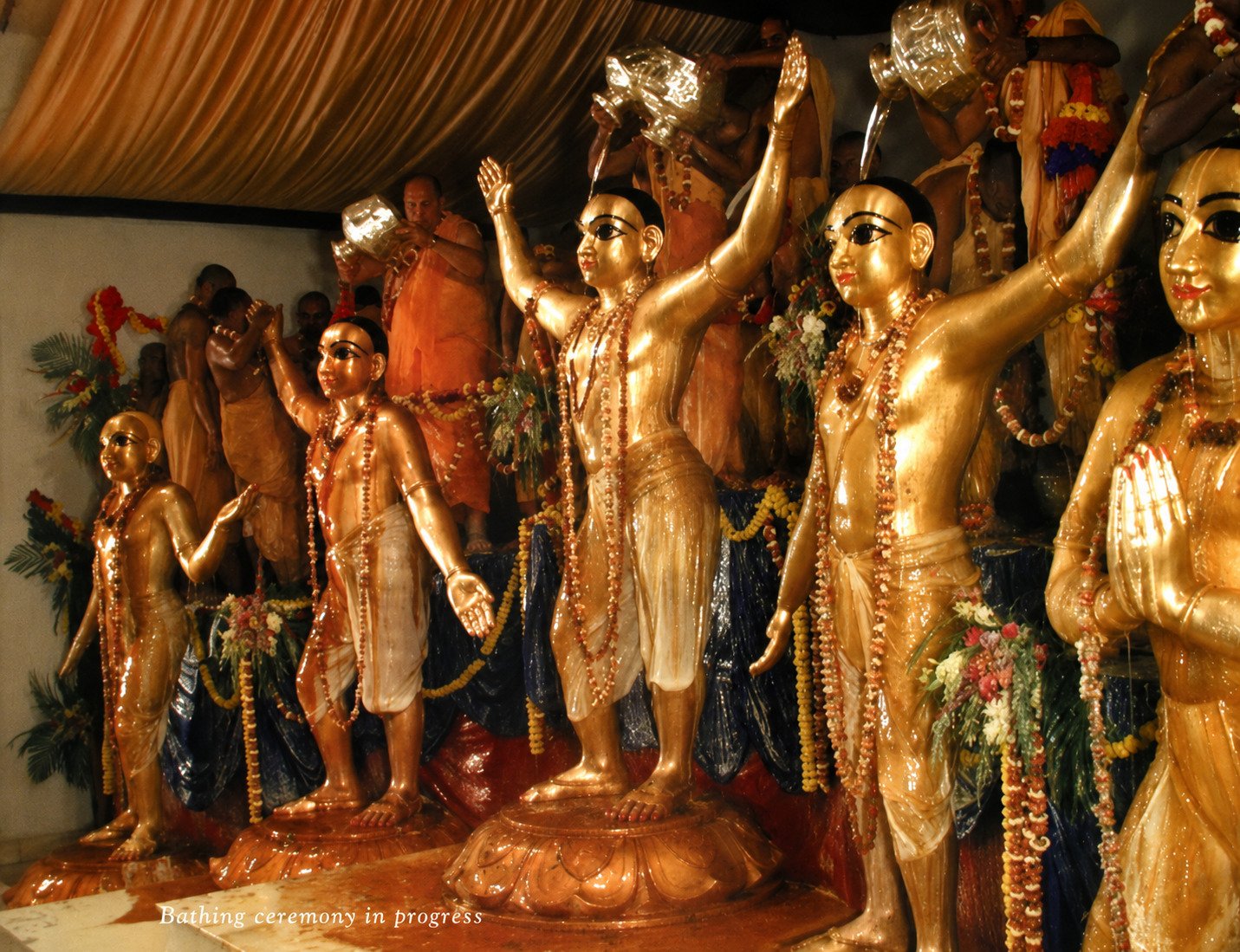
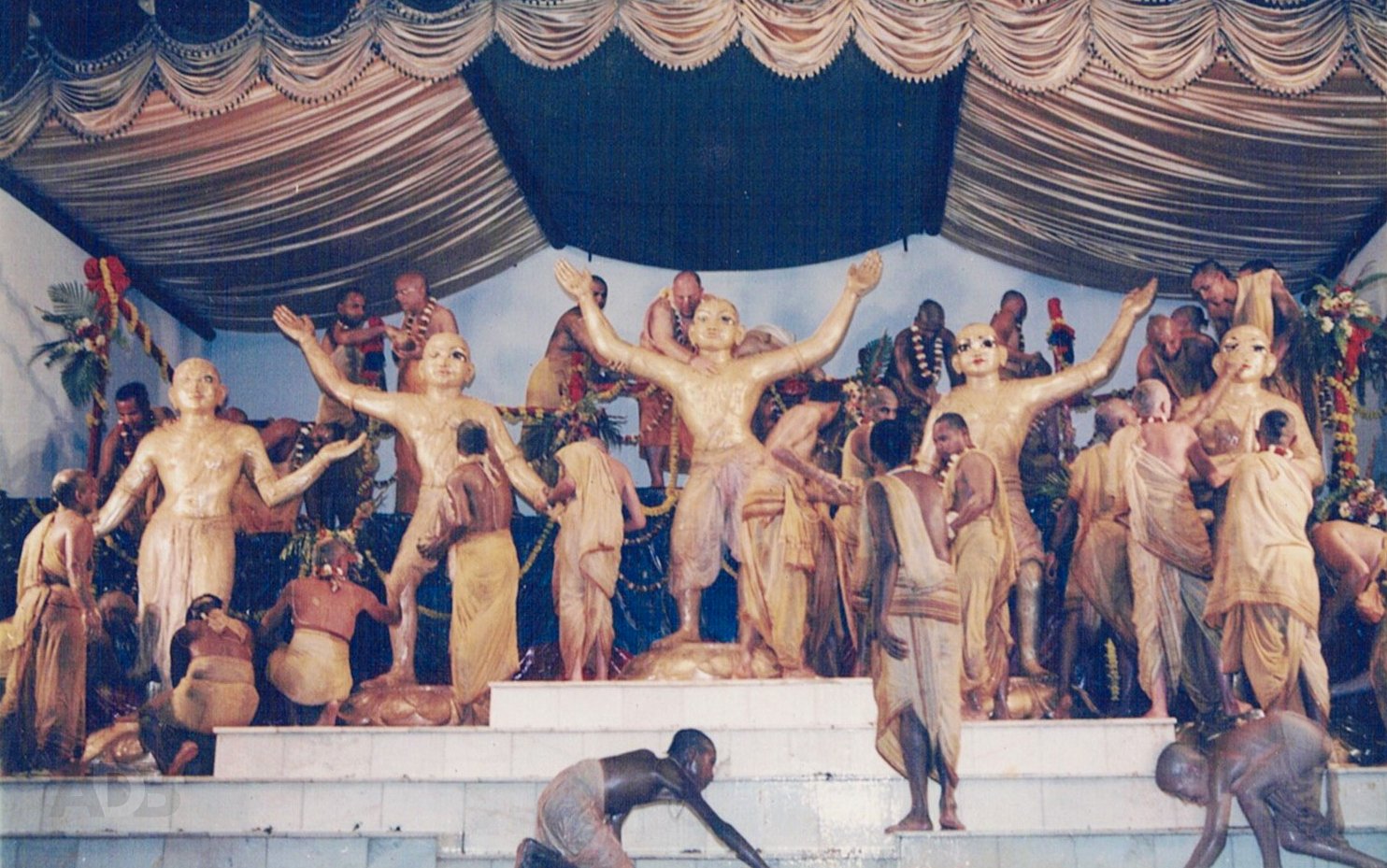
From 21–23 February 2004, devotees from around the world gathered in Śrī Māyāpur for one of the most memorable festivals in ISKCON’s history.
Continuous kīrtana filled the temple as sacred installation ceremonies unfolded.
The Deities’ eyes were ceremonially opened.
Their senses were invoked through traditional Vedic rituals.
The magnificent mahā-abhiṣeka bathed the Lord in auspicious offerings.
Finally, the sacred prāṇa-pratiṣṭhā ceremony formally established Śrī Śrī Pañca-tattva for worship.
Behind these public ceremonies were hundreds of devotees quietly offering their service.
Artists carefully painted the Deities’ eyes, lips, fingernails, toenails, and hair.
Flower decorators transformed the temple into a garden of devotion.
Priests meticulously prepared every ritual.
Volunteers welcomed guests from around the world.
Musicians maintained continuous kīrtana.
Every devotee became part of the offering.
The installation was not simply witnessed.
It was experienced.
Many devotees later described feeling an extraordinary spiritual atmosphere unlike anything they had ever known.
For countless pilgrims, those few days remain among their most treasured memories of Māyāpur.
Reference: The Advent of Śrī Śrī Pañca-tattva, pp. 87–90. Eighteen Days – Śrī Pañca-tattva’s Māyāpur-līlā, pp. 18–26.
A Historic Date
31 January 2004
Departure from Swamimalai
↓
6 February 2004
Arrival in Śrī Māyāpur
↓
21–23 February 2004
Grand Installation Festival
Looking Ahead…
The installation of Śrī Śrī Pañca-tattva was far more than the completion of an extraordinary project.
Many devotees felt they had witnessed the beginning of a new era in ISKCON.
Among those who experienced those unforgettable days firsthand was Jananivāsa das (ACBSP), who had served the Deities of Māyāpur for decades.
His reflections reveal why so many devotees remember the arrival of Śrī Śrī Pañca-tattva not merely as a historic event, but as an overwhelming manifestation of the Lord’s mercy.
Reference: Full of Abundant Grace, Māyāpur Magazine, 2006.
A New Era in ISKCON
The installation of Śrī Śrī Pañca-tattva in 2004 did not happen in isolation.
It marked the fulfilment of a vision that had been unfolding in Māyāpur for many years.
During Śrīla Prabhupāda’s Centennial Year in 1996, Śrī Māyāpur Chandrodaya Mandir witnessed another important milestone in its history of Deity worship with the arrival of the smaller Śrī Pañca-tattva Deities. To accommodate Their worship, the temple expanded once again, and Their regular worship commenced on Gaura-pūrṇimā that year.
Yet this was only the beginning.
Eight years later, the arrival of the monumental aṣṭa-dhātu Śrī Śrī Pañca-tattva Deities would transform not only the temple, but the devotional lives of countless pilgrims who would stand before Them in the years to come.
As one historical account beautifully states:
“But the most amazing change was yet to come: the arrival in 2004 of the big Pañca-tattva Deities. That event saw a new era commence in ISKCON.”
For many devotees who witnessed those days, it truly felt like the beginning of a new chapter in Lord Śrī Caitanya Mahāprabhu’s worldwide saṅkīrtana movement.
Reference: Full of Abundant Grace, Māyāpur Magazine, 2006.
“There Was So Much Mercy There”
Few devotees are better placed to describe the installation of Śrī Śrī Pañca-tattva than Jananivāsa das (ACBSP).
Having served the Deities in Māyāpur for decades, he personally witnessed many of the temple’s historic milestones, including the installation of Śrī Śrī Rādhā-Mādhava and, years later, Śrī Śrī Pañca-tattva.
Reflecting on those unforgettable days, he observed something extraordinary.
“When Radha-Madhava were installed, there were definitely feelings of transcendence. When we went up to install the chakra after They were installed, you could feel They were manifesting something. But nothing like the installation of Pañca-tattva. Even before They were installed, there was so much mercy there.”
Years separated the two installations.
Was this simply the natural deepening of devotional appreciation?
Jananivāsa das (ACBSP) did not think so.
He explained:
“I would say it was an act of mercy, of Their sweet will. We had fulfilled a desire of Srila Prabhupada’s to bring these Deities, and the overwhelming feelings that everyone experienced was Śrī Pañca-tattva manifesting Their presence.”
His words capture what many devotees struggled to express.
The installation was not remembered only because of its size, organisation, or beauty.
It was remembered because devotees experienced an extraordinary outpouring of the Lord’s causeless mercy.
As the article continues:
“Worldwide, devotees felt that merciful glance of Śrī Caitanya Mahāprabhu and His associates; they experienced the abundant grace that emanates from the Deity form of the Lord, and all were swept up in an unmistakable shower of love of God.”
Finally, Jananivāsa das (ACBSP) offered a reflection that has remained with many devotees ever since:
“It’s not something you can create. It’s something that, no matter how hard you try, you can’t produce it. Grace comes of its own accord.”
Those who were present during those historic days often speak not only of what they saw, but of what they felt.
For many, that feeling remains the lasting legacy of Śrī Śrī Pañca-tattva’s arrival in Māyāpur.
Reference: Full of Abundant Grace, Māyāpur Magazine, 2006.
Why We First Chant the Pañca-tattva Mantra
Every kīrtana in ISKCON begins by glorifying Śrī Śrī Pañca-tattva.
Before chanting the Hare Kṛṣṇa mahā-mantra, devotees first pray:
śrī-kṛṣṇa-caitanya prabhu-nityānanda
śrī-advaita gadādhara śrīvāsādi-gaura-bhakta vṛnda
Śrīla Prabhupāda explained that there are no offenses in chanting the holy names of Śrī Śrī Pañca-tattva.
Out of Their boundless compassion, They freely bestow mercy upon all living beings, regardless of qualification. By first taking shelter of Lord Śrī Caitanya Mahāprabhu and His eternal associates, devotees pray for the spiritual strength to chant the Hare Kṛṣṇa mahā-mantra with sincerity, humility, and devotion.
Standing before these magnificent Deities in Śrī Māyāpur-dhāma, visitors are reminded that the same invitation Lord Śrī Caitanya Mahāprabhu extended more than five hundred years ago remains open today.
Everyone is welcome.
Everyone is invited to chant.
Everyone is invited to receive Their causeless mercy.
Reference: Eighteen Days – Śrī Pañca-tattva’s Māyāpur-līlā, pp. 28–31.
Continue Exploring the History
The story presented here offers only a glimpse into one of the most remarkable chapters in the history of ISKCON Māyāpur.
To discover many more rare historical photographs, behind-the-scenes stories, firsthand recollections, historical documents, and the complete account of Śrī Śrī Pañca-tattva’s manifestation, we warmly invite you to explore the following historical resources.
📖 The Advent of Śrī Śrī Pañca-tattva — the vision, creation, casting, and journey.
This beautifully illustrated book chronicles the fulfilment of Śrīla Prabhupāda’s vision—from the search for master craftsmen in South India and the ancient lost-wax bronze casting process to the creation, journey, and installation of one of the world’s largest worshipable aṣṭa-dhātu Deities. Richly illustrated with historical photographs and detailed accounts from those directly involved, it preserves an important chapter in the history of ISKCON Māyāpur.
📖 Eighteen Days – Śrī Pañca-tattva’s Māyāpur-līlā — the arrival, preparation, and installation.
Relive the unforgettable eighteen days between Śrī Śrī Pañca-tattva’s arrival in Māyāpur and Their historic installation. Through rare photographs and firsthand memories, this book captures the anticipation, excitement, and spiritual atmosphere that surrounded one of the most memorable festivals in ISKCON’s history.
📖 Full of Abundant Grace, Māyāpur Magazine, 2006.
Discover the inspiring history and divine milestones of Mayapur’s Deity worship through the eyes of two of Their longest-serving caretakers.
📷 Historical Photo Gallery – Śrī Śrī Pañca-tattva Installation (2004)
Browse a collection of historical photographs documenting the arrival of Śrī Śrī Pañca-tattva in Śrī Māyāpur-dhāma, the installation ceremonies, mahā-abhiṣeka, kīrtana, and many unforgettable moments from this historic festival.
View the Historical Photo Gallery
Since Their installation in 2004, millions of devotees and pilgrims have stood before Śrī Śrī Pañca-tattva with prayers, gratitude, tears, and hope.
Every flower lovingly offered, every kīrtana sung, every garland placed around Their necks, every service rendered, and every folded hand raised in prayer has become part of Their continuing history.
Today, that history continues with you.
May learning about Their extraordinary manifestation deepen your appreciation for Śrīla Prabhupāda’s vision, strengthen your connection with Lord Śrī Caitanya Mahāprabhu’s saṅkīrtana movement, and inspire you to return again and again to the shelter of Śrī Śrī Pañca-tattva’s causeless mercy.
“I request everyone from all around the world to please come to Śrī Māyāpur Dhāma and receive the most wonderful darśana and the endless blessings of Śrī Pañca-tattva.”
— His Holiness Jayapatākā Swami
Guest Editorial, Back to Godhead, Special Māyāpur Issue, 2004