
Kānāi Nāṭaśālā
In the morning, the Lord left and went to a place known as Kānāi Nāṭaśālā. While there, He saw many pastimes of Lord Kṛṣṇa.
PURPORT
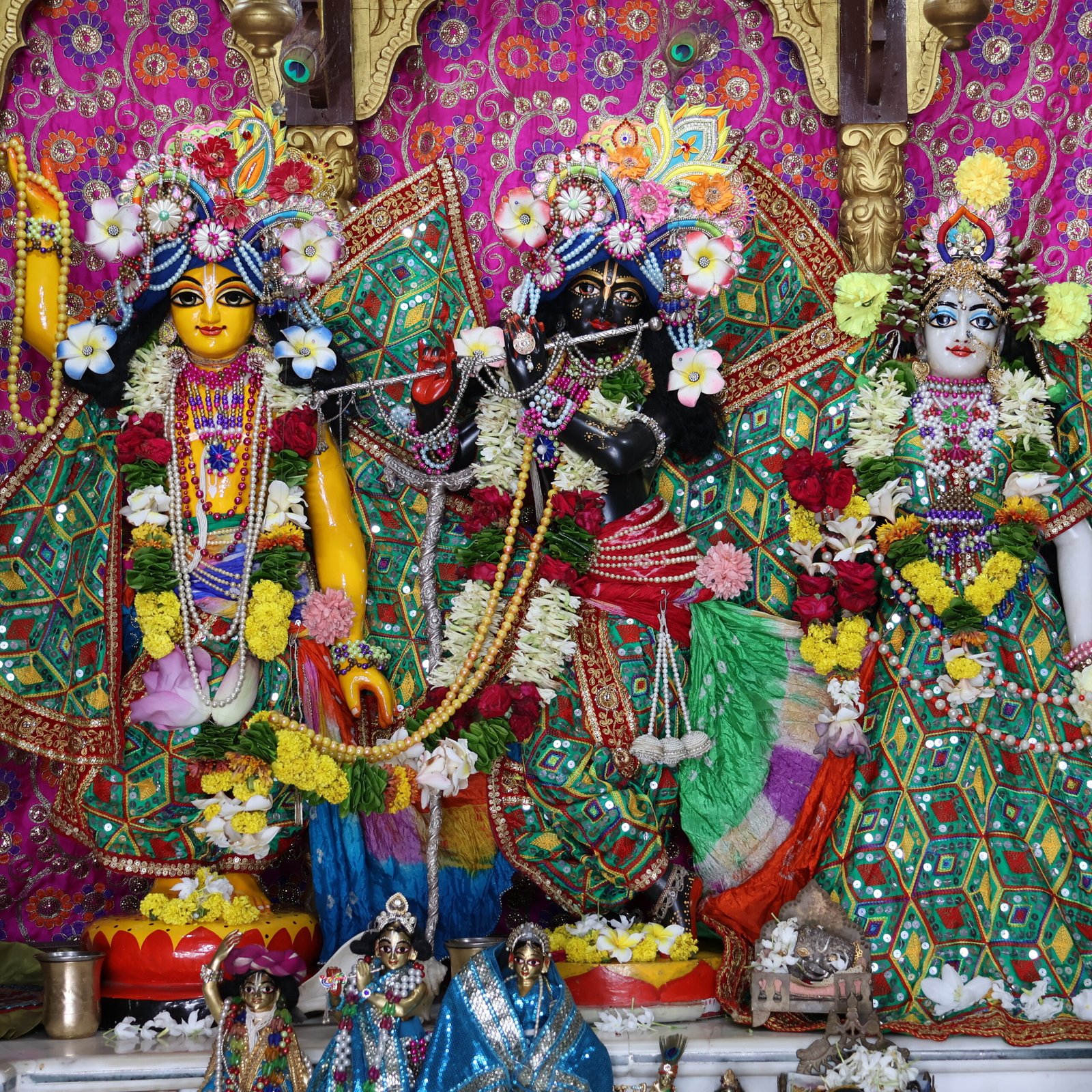
In those days in Bengal there were many places known as Kānāi Nāṭaśālā, where pictures of the pastimes of Lord Kṛṣṇa were kept. People used to go there to see them. This is called kṛṣṇa-caritra-līlā. In Bengal there are still many places called hari-sabhā, which indicates a place where local people gather to chant the Hare Kṛṣṇa mahā-mantra and discuss the pastimes of Lord Kṛṣṇa. The word kānāi means “Lord Kṛṣṇa’s,” and nāṭaśālā indicates a place where pastimes are demonstrated. So those places which at the present moment are called hari-sabhā may previously have been known as Kānāi Nāṭaśālā.
(CC Madhya 1.227)
The Lord then visited the village known as Rāmakeli and the place known as Kānāi Nāṭaśālā. From there He returned to Śāntipura.
(CC Madhya 16.211)
Upon receiving information that Lord Caitanya Mahāprabhu was proceeding toward Vṛndāvana from Kuliyā, Nṛsiṁhānanda absorbed himself in meditation and by his mental activities began constructing a very nice road from Kuliyā to Vṛndāvana. All of a sudden, however, he broke his meditation and told the other devotees that this time Lord Caitanya Mahāprabhu would not go to Vṛndāvana but would travel only as far as the place known as Kānāi Nāṭaśālā. This is described in Madhya-līlā, chapter one, verses 155 through 162.
(CC Adi 10.35 purport)
When Śrī Nṛsiṁhānanda Brahmacārī heard that Lord Caitanya Mahāprabhu would go to Vṛndāvana, he became very pleased and mentally began decorating the way there. First Nṛsiṁhānanda Brahmacārī contemplated a broad road starting from the city of Kuliyā. He bedecked the road with jewels, upon which he then laid a bed of stemless flowers. He mentally decorated both sides of the road with bakula flower trees, and at intervals on both sides he placed lakes of a transcendental nature. These lakes had bathing places constructed with jewels, and they were filled with blossoming lotus flowers. There were various birds chirping, and the water was exactly like nectar. The entire road was surcharged with many cool breezes, which carried the fragrances from various flowers. He carried the construction of this road as far as Kānāi Nāṭaśālā. Within the mind of Nṛsiṁhānanda Brahmacārī, the road could not be constructed beyond Kānāi Nāṭaśālā. He could not understand why the road’s construction could not be completed, and thus he was astonished. With great assurance he then told the devotees that Lord Caitanya would not go to Vṛndāvana at that time. Nṛsiṁhānanda Brahmacārī said, “The Lord will go to Kānāi Nāṭaśālā and then will return. All of you will come to know of this later, but I now say this with great assurance.”
(CC Madhya 1.155 – 162)
With great assurance he then told the devotees that Lord Caitanya would not go to Vṛndāvana at that time.
PURPORT
Śrīla Nṛsiṁhānanda Brahmacārī was a great devotee of Lord Caitanya Mahāprabhu; therefore when he heard that from Kuliyā Śrī Caitanya Mahāprabhu was going to Vṛndāvana, although he had no material wealth he began to construct within his mind a very attractive path or road for Caitanya Mahāprabhu to traverse. Some of the description of this path is given above. But even mentally he could not construct the road beyond Kānāi Nāṭaśālā. Therefore he concluded that Caitanya Mahāprabhu would not go to Vṛndāvana at that time.
(CC Madhya 1.161)