
Śrīla Prabhupāda in Mayapur – Only His Place of Worship?
by Paṅkajaṅghri Dāsa
Published: Spring 1996
Source: Mayapur Journal, Issue 29
Does anybody know, why Śrīla Prabhupāda said, “Mayapur is my place of worship,” for it seems that he established places of worship all over the world. Why Mayapur? Did he act any different here?
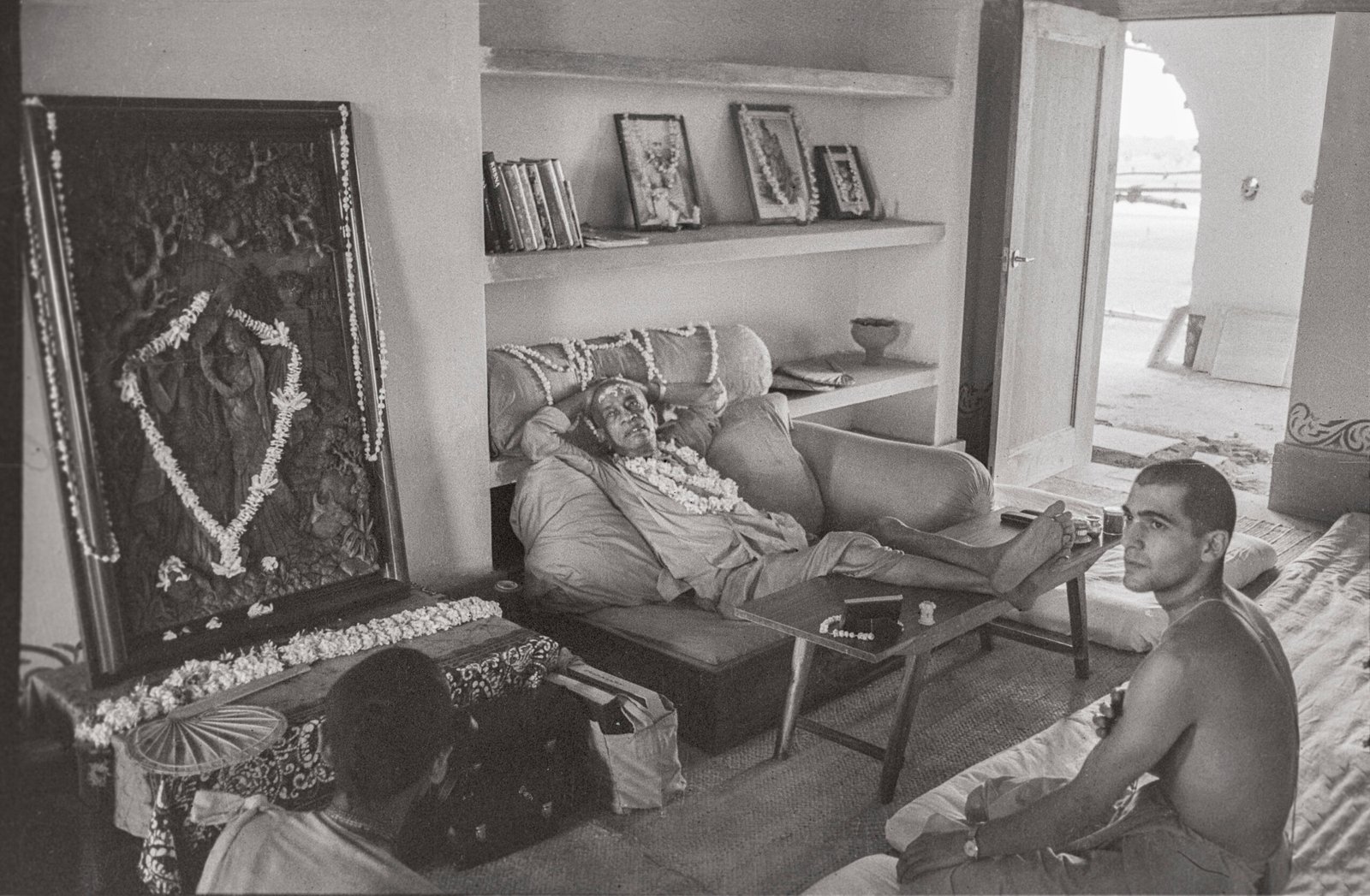
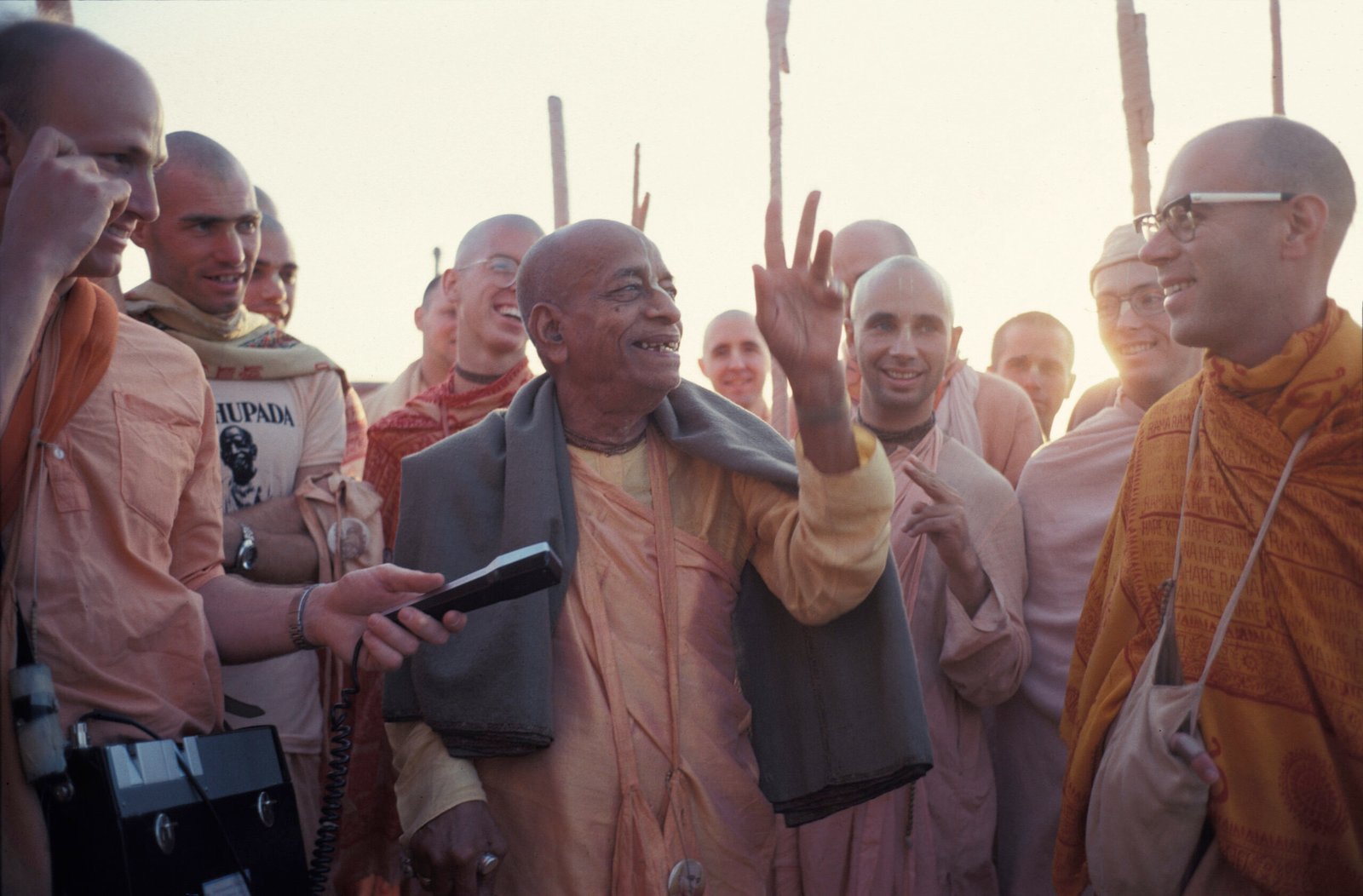
Quite often, we saw that Śrīla Prabhupāda was very informal in Mayapur, sitting relaxed with legs across his desk, leaning back on his cushion, hands behind his head, laughing along with his disciples. But then in the same room, his heaviness was felt when he declared: “It is the duty of the disciple to question guru. Why no one has any questions?” The electrifying presence of silence that followed, remained until a pertinent question was raised.
Prabhupāda, like a loving father, arranged nice buildings for his disciples with modern bathrooms.
“They have sacrificed so much for me. Although they are ready to lie down under a tree, it is my duty to see that they are, as far as possible, comfortably situated. That is my duty.”
But when the facility was misused, Śrīla Prabhupāda became angry. I clearly remember the day when we had a garbage party. After chewing the cane, we spat out the remnants on the veranda. “This is not what the building is for. Whoever has done this should not be allowed to live here.”
Prabhupāda was:
- Pleased when we decorated the temple room for a festival, but displeased when he found out we haven’t invited any guests.
- Caring when he saw a devotee was too skinny, telling him to eat more.
- Pained when he saw local children rummaging through the garbage, looking for food.
- Happy to see everyone ecstatically dancing while he rang the temple bell.
- Concerned to see how guests were being taken care of. Once he suddenly appeared while we were serving prasādam to some visitors. Taking charge, he began to direct us: “Give dāl here, put more rice there, etc.”
- Elated upon receiving devotees returning from their preaching fields or hearing news of their preaching efforts, or receiving newly printed books.
- Disturbed by seeing one of his disciples wearing a lunghi instead of a dhotī.
- Angry at a devotee who speculated in painting the pastimes of Rādhā and Krishna.
- Disappointed to hear criticism of his society or foreign devotees.
- Distraught upon receiving news of the ongoing fight for Rādhā-Rasabihari’s land at Juhu in Bombay.
- Stunned with ecstatic emotion during one of his Śrīmad-Bhāgavatam classes.
- Apologizing for any inconvenience caused to his devotees during the festival, and humbly announcing, I am also a member of ISKCON.
- Proud to extol to Indian visitors his foreign disciples for their devotion and achievements abroad.
- Appearing like the sun god, on that memorial day, when alone on the veranda, looking west, brilliant effulgence emanating from him, while an exasperated Gargamuni Swami pleads: “Will somebody bring a camera?”
- Spontaneous in calling for a kīrtana, when shown the new, unbreakable mṛdaṅga made in the USA with plexiglas.
- Hiding crouched under the staircase to check the alertness of the devotee on night duty.
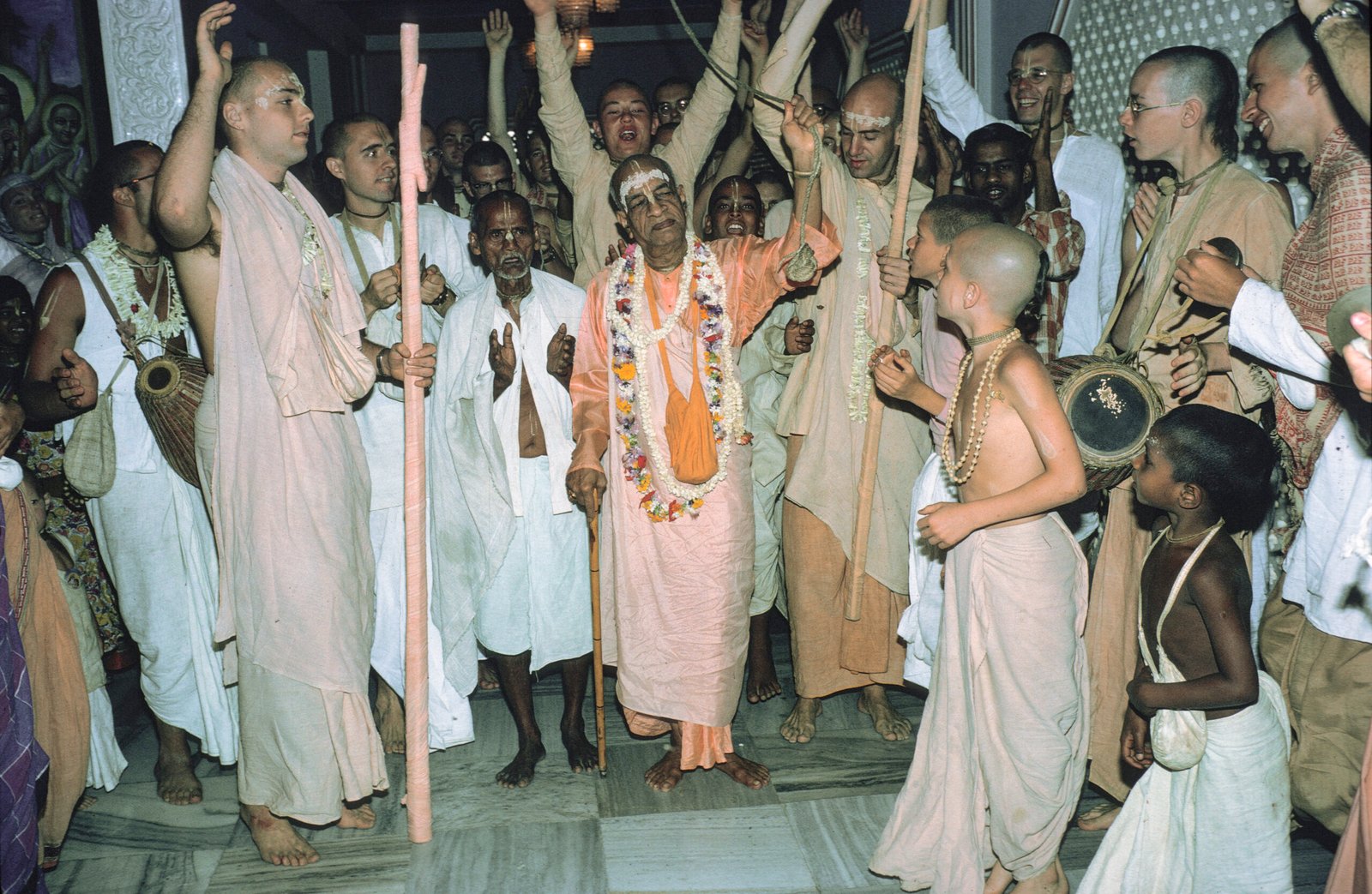
Śrīla Prabhupāda was like the all pervading Supersoul. He saw every tap that dripped, every light or fan left on in an empty room. He noticed when the window catch left hanging or the places which never got cleaned. He spoke on this negligence with importance, while every night he worked on his Bhaktivedanta purports.
Encouraging, guiding, instructing and chastising, Śrīla Prabhupāda lovingly moulded his followers. Sometimes a rose, sometimes a club, he revealed his desire, and the work to be done to manifest it, and the consciousness to be attained for sustaining it. He expected Mayapur to be a model city to which world leaders in the future would come, study it and try to implement in their own countries.
Certainly his grand plan for Mayapur was different from that of any other center. But was he any different here? Through all of the transcendental moods he exhibited, he was always the same equipoised Prabhupāda. Of course, his devotion in Mayapur hardly needs an introduction, but why “place of worship?” It could just as easily have been his office, or home. Did it really make any difference where Śrīla Prabhupāda was? Wasn’t everything he did worship of Krishna?
Maybe I am trying to understand something too transcendental or simply inconceivable, or maybe I should change my paradigm of what worship really means. Maybe you can help me, dear reader.