
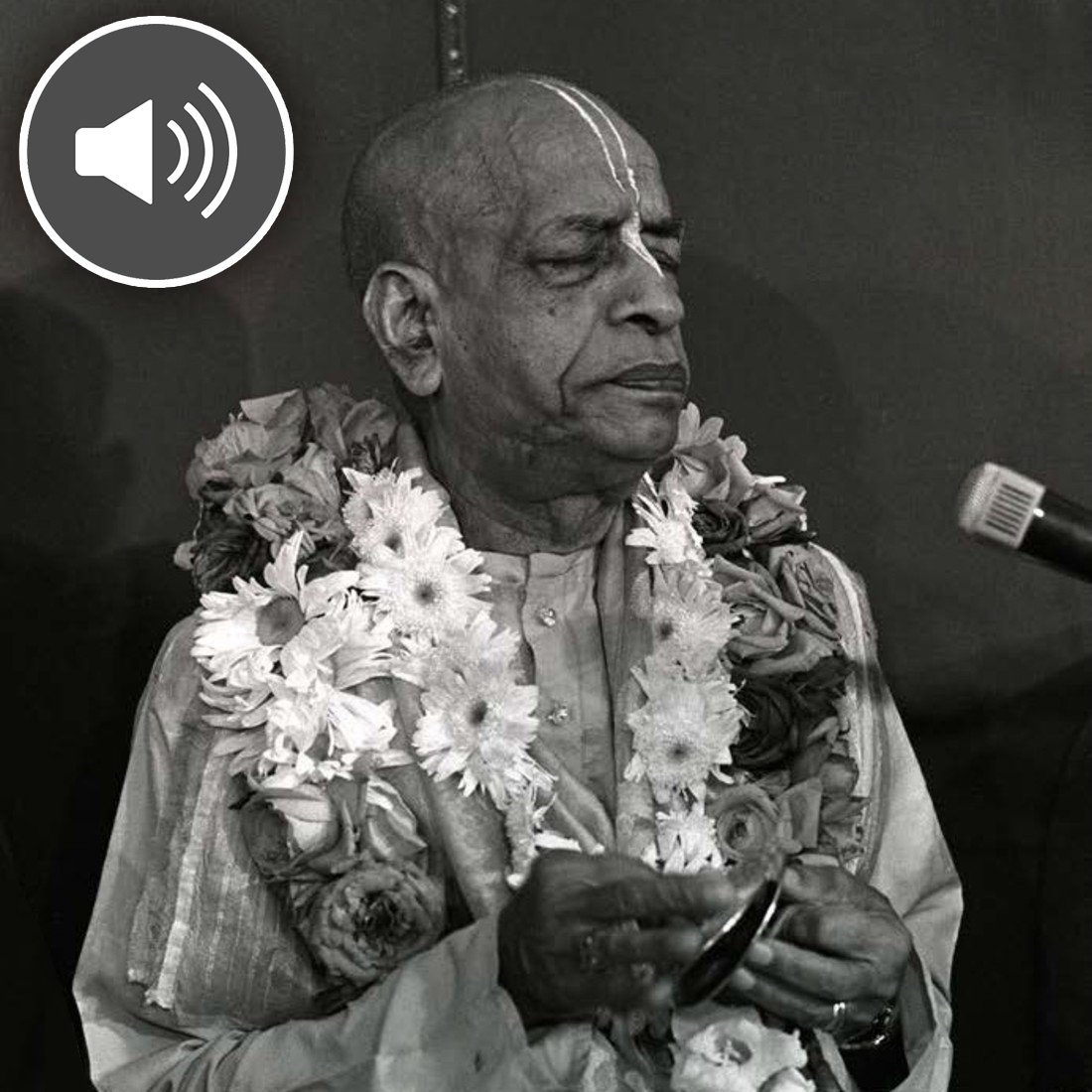
Srila Prabhupada
Just like Sārvabhauma Bhaṭṭācārya. You know, Sārvabhauma Bhaṭṭācārya was a great scholar and . . . Māyāvādī scholar, but Caitanya Mahāprabhu made him surrender unto Him. He became Caitanya Mahāprabhu's admirer, follower, after being defeated in Vedānta-sūtra understanding. That story is there in the TLC. (Teachings of Lord Caitanya)
So Sārvabhauma Bhaṭṭācārya became convinced that Śrī Caitanya Mahāprabhu is Kṛṣṇa. He wrote hundred verses about Caitanya Mahāprabhu, out of two verses are available in the Caitanya-caritāmṛta. He composed—he was a very learned scholar—he composed one hundred verses about Caitanya Mahāprabhu, and handed it over. But in all those verses he admitted that, "You are Kṛṣṇa."
So Caitanya Mahāprabhu, of course He was very much pleased that Sārvabhauma Bhaṭṭācārya understood, but because He was playing the part of an ācārya, He, externally He became, "What you have written all these things?" He immediately torn out and throw it away. But the devotees saved only two. That two verses are there:
vairāgya-vidyā-nija-bhakti-yoga-
śikṣārtham ekaḥ puruṣaḥ purāṇaḥ
śrī (kṛṣṇa) caitanya mahāprabhu (śarīra-dhāri)
kṛpāmbudhir yas tam ahaṁ prapadye
(CC Madhya 6.254)
You'll find that verse that, "You are the same Śrī Kṛṣṇa. You have come to teach us vairāgya-vidyā." Vairāgya-vidyā means how to become unattached with this material world. That is called vairāgya-vidyā. Because our . . . we are accepting different types of body on account of our attachment. Because we are attached to this material world, we want to enjoy. That is illusion. We cannot enjoy, we are simply suffering, but we are accepting it as enjoyment.
(710731 - Lecture BS 5.35 - New York)
Our, this Gauḍīya-sampradāya, Caitanya Mahāprabhu's, Caitanya Mahāprabhu's descendants, our line of God-realization is that separation, feeling of separation. Not that we have got Kṛṣṇa within our hand. No. This feeling of separation, worship of Kṛṣṇa by feeling of separation, is better than the worship by directly meeting. Vipralambha-sevā.
So this vairāgya-vidyā, renunciation . . . vairāgya-vidyā-nija-bhakti-yoga (CC Madhya 6.254). Bhakti-yoga means vairāgya-vidyā. Vairāgya-vidyā means no more attachment for this material world. That is vairāgya. So bhakti-yoga means vairāgya-vidyā. So this Sārvabhauma Bhaṭṭācārya said, vairāgya-vidyā-nija-bhakti-yogam. This vairāgya-vidyā means bhakti-yogam . . . śikṣārtham ekaḥ puruṣaḥ purāṇaḥ. So Kṛṣṇa, the supreme original personality, He has come down to teach us this vairāgya-vidyā.
Vairāgya-vidyā-nija-bhakti-yoga-śikṣārtham ekaḥ puruṣaḥ purāṇaḥ, śrī-kṛṣṇa-caitanya-śarīra-dhārī (CC Madhya 6.254). Śrī-kṛṣṇa-caitanya. Śrī Kṛṣṇa has appeared in the form of Lord Śrī Kṛṣṇa Caitanya. So Sārvabhauma Bhaṭṭācārya says, "My respectful obeisances unto Him."
(680202 - Lecture CC Madhya 06.254 - Los Angeles)